🧵 《Custom Embroidery Painting: Frequently Asked Questions》
Intro: Embroidered wall art looks stunning, but ordering custom pieces raises a lot of questions. Is it worth the price? Will it match my space? How do you maintain it? Here are the six most common questions, answered clearly — so you can order with confidence.
Q: Embroidery costs way more than prints. Is it actually worth it?
A: It's worth it for three reasons — texture, longevity, and uniqueness.
A print is ink on paper — flat, static, and it starts feeling stale after a couple of years. Embroidery is stitched thread by thread. The silk has sheen. The texture has dimension. Catch it at an angle and you see the light play across the stitches. A print is "a picture on the wall." Embroidery is "a piece of work on the wall."
Longevity, too. Paper prints fade and yellow after a few years of sun exposure. Thread? As long as it's not soaked or baked in direct sun daily, it looks the same in ten years. And each piece has its own subtle stitch pattern — it's not a mass-produced copy. You won't see the exact same thing in someone else's home.
✨ 【Close-up detail of faces and stitching】
Up close, the silk sheen and layered stitching are textures no print can replicate
Q: This mystical / tarot style — won't it be hard to match with my home?
A: Actually, it's more versatile than you'd think.
Deep plum background with gold and silver thread falls into the category of dark but quiet. Put it in a dark space — brown walls, emerald velvet, vintage wood furniture — and it amplifies the mood, layering into the atmosphere perfectly. Put it in a light space — white walls, oak, warm neutrals — and it becomes the focal point, instantly giving a plain wall character.
The real mistake is putting it in a busy, overdecorated room. If your walls already have wallpaper, gallery walls, and colorful decor everywhere, this piece will get lost in the noise. Clean walls and a restrained palette are its best backdrop.
Quick test: If your room has three main colors or fewer, it'll work.
🛏️ 【Vintage bedroom scene】
Emerald velvet, wood headboard, plum-toned art — tonal layering for a moody, refined feel
Q: What's worth paying extra for, and what's just marketing?
A: Three upgrades are worth it. Two usually aren't.
✅ Worth the investment:
1.Thread upgrade — Real silk or high-density rayon makes a huge difference in sheen and fineness. If your budget stretches anywhere, stretch it here.
2.Stitch density — Higher density means no backing fabric peeking through, fuller coverage, and a more refined look at every distance.
3.Framing quality — The frame and mat are the presentation. Good framing elevates the entire piece.
❌ Usually not worth it:
1.Full character redraws — Major design changes are basically a new commission, the cost doubles, and the result might not beat the original.
2.Premium packaging — Safe shipping matters, but fancy gift boxes get thrown away after unboxing.
If you're not sure what to pick, platforms with customizable style options make it easier. room127, for example, offers different thread grades and finish levels across their embroidery collection, and their team can advise based on your budget — no hard sell on the most expensive option. Browse their embroidery pieces at room127 to see the difference between finish levels for yourself.
Q: Where does this style work best, and where should I avoid it?
A: Top three spots:
1.Above the bed — calm, atmospheric, lovely to look at before sleep
2.Study / home studio — strong artistic vibe, fits naturally in creative spaces
3.Entryway feature wall — memorable first impression the moment someone walks in
Places to avoid:
1.Inside shower zones — too much humidity long-term (dry bathroom areas are fine)
2.Near kitchen cooking areas — grease settles into threads and is nearly impossible to clean
3.Low in kids' rooms — vulnerable to bumps and spills; hang it high and it's fine
🎨 【Scene Graph】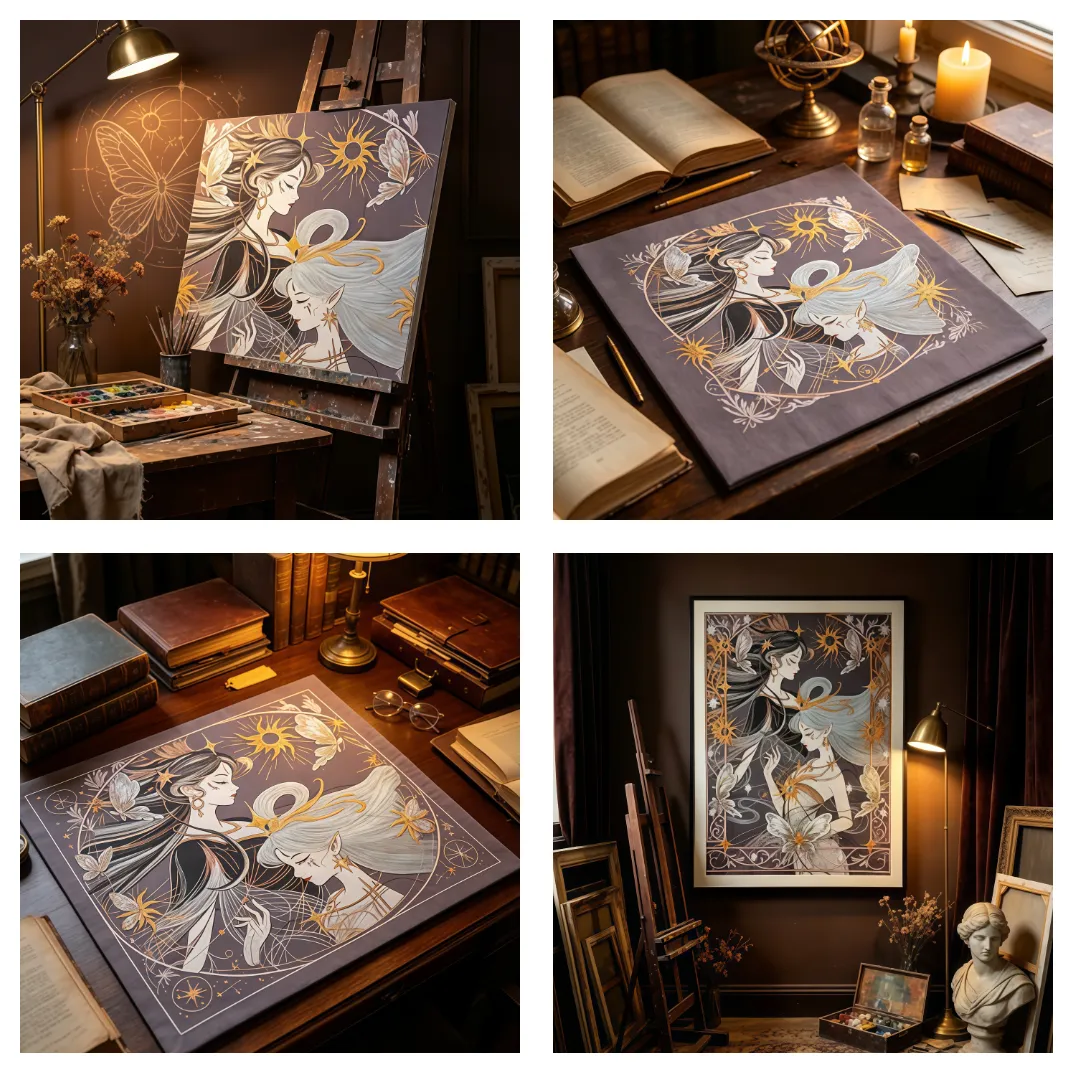
Closing Thought
Embroidery art isn't a necessity. It's the kind of thing you get when you want your home to feel considered.
You don't interact with it every minute like a sofa or a mattress. But every time you walk past, every time you glance up and see it — you get that quiet feeling that someone put thought into this space. That's the real value of decorative art.
