
Three shapes coiled from natural jute — arch, circle, arch — stack vertically on warm linen. It is less a painting than a quiet object, and it makes any room feel more like a place to breathe.
here is a reason people touch rope. It is one of the oldest materials humans have ever worked with — twisted from plant fiber, coiled into knots, used to tie, pull, hang, and hold. This painting takes that ancient material and does something quietly radical with it: it coils jute into three precise shapes and pins them to a sheet of warm linen, turning a functional fiber into a work of calm.
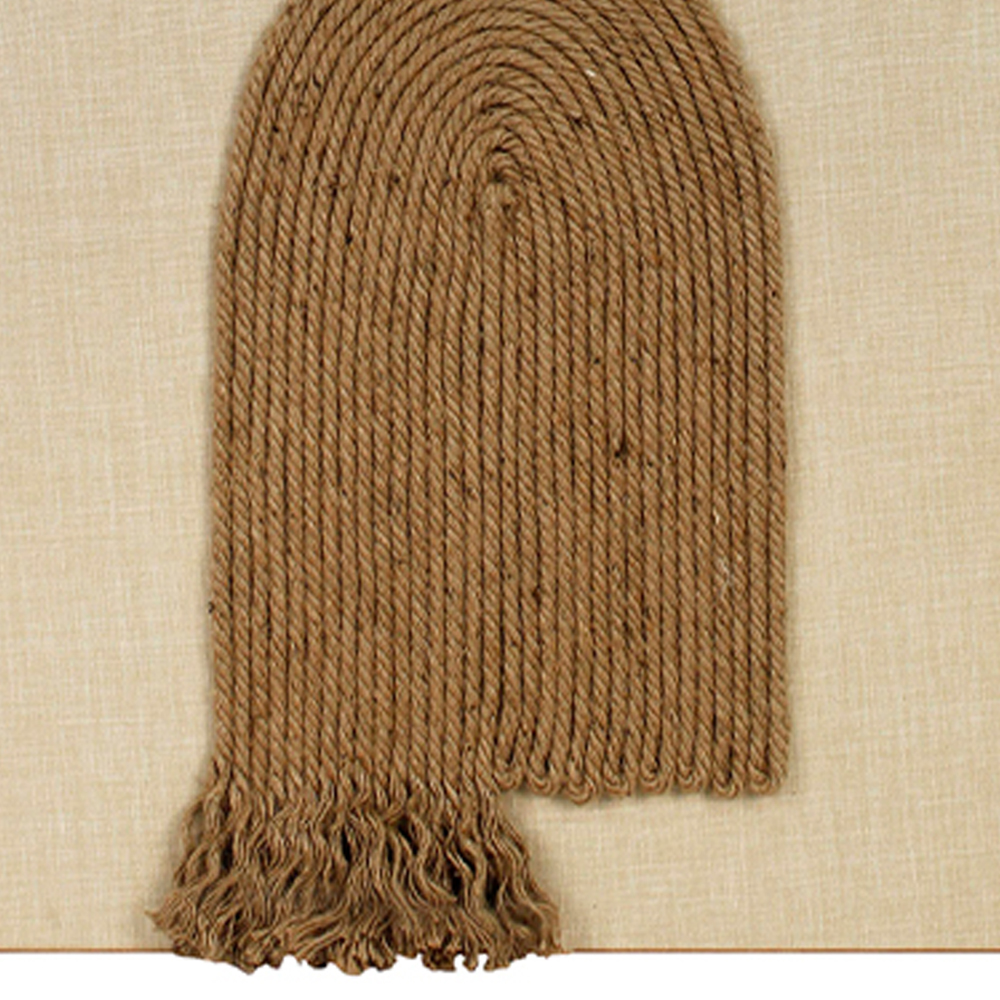
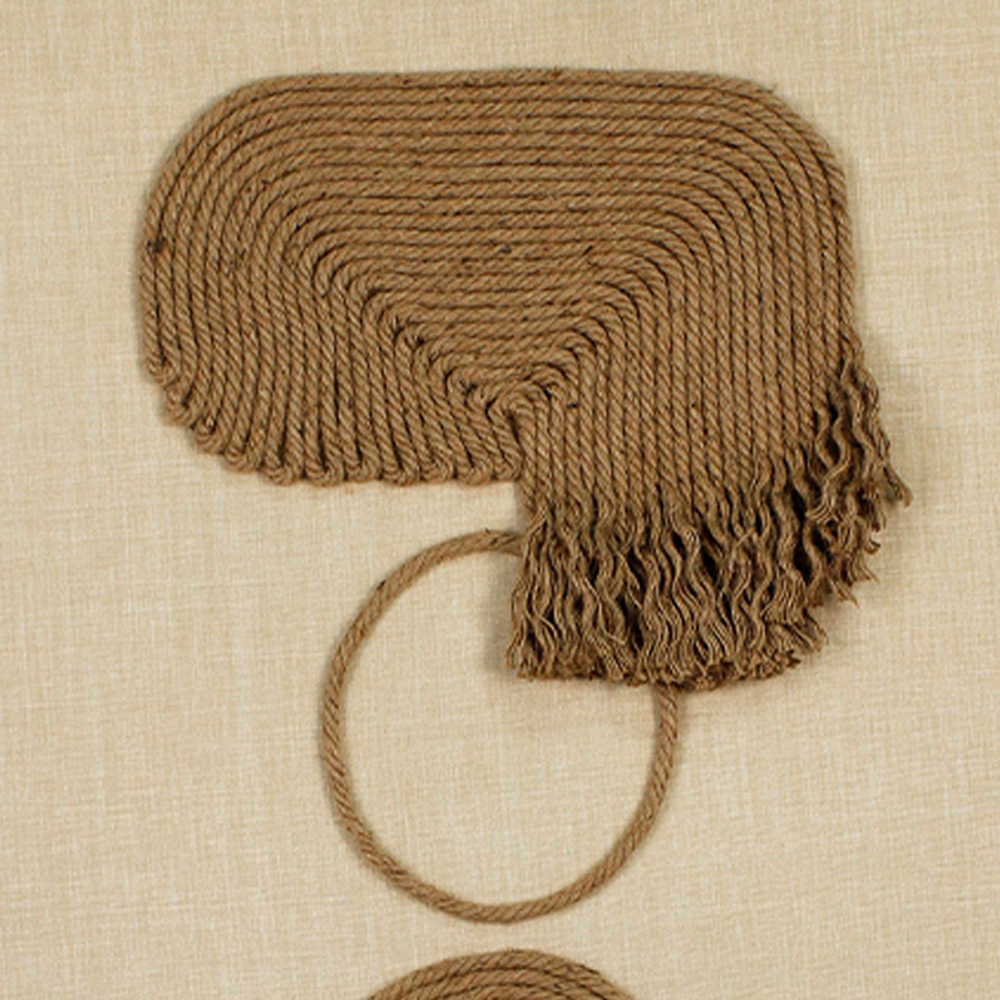
The composition is disarmingly simple. A rounded rectangle at the top. A thin circle in the middle. An arch at the bottom. Each shape is built from rope coiled in concentric lines, and two of them carry short fringes of loose fiber. Against the plain linen ground, the three forms read like a stacked totem — abstract but somehow familiar, like a symbol you cannot quite name.
~ ~ ~
The Three Shapes
Understanding the piece means understanding its three elements, each with a different character and a different role in the composition.
⌂
The Rounded Arch
Coiled rope forms a soft rectangle with a fringe at one corner. It anchors the top and introduces the tactile fringe detail.
○
The Circle
A single thin rope ring floats between the two solid shapes, creating negative space and a moment of visual rest.
⌒
The Tall Arch
A tombstone-shaped coil with a fringe at its base grounds the composition. Its vertical lines draw the eye downward.
The circle is the quiet hero of the piece. It is the emptiest element, and it is what keeps the composition from feeling heavy — a breath between two solid forms.
The color palette is almost monochrome: natural jute brown on warm cream linen. No dyes, no pigments, no decoration. The only variation comes from the way light hits the coiled rope — bright on the raised edges, soft in the grooves between coils. It is a piece that rewards slow looking, because the detail is all in the material, not in the image.
~ ~ ~
Why It Feels Calming
There is a reason this piece works so well in bedrooms, spas, and reading corners. Its visual language is the language of restraint and repetition. The coiled lines are rhythmic, like breathing. The stacked composition is symmetrical without being rigid. The natural fiber carries an implicit association with baskets, mats, and handwoven textiles — objects that feel safe and familiar.
In a room full of hard surfaces — glass, metal, polished stone — this painting introduces a material that is soft, matte, and imperfect. It absorbs sound. It softens light. It makes a space feel less like a showroom and more like a home.
The Fringe Detail
The loose fiber fringes on two of the three shapes are the piece's only "messy" element, and they are essential. Without them, the composition would feel too controlled, too designed. The fringes introduce a small amount of chaos — a reminder that this was made by hand, not by machine.
~ ~ ~
Where It Belongs
Sunlit Corner
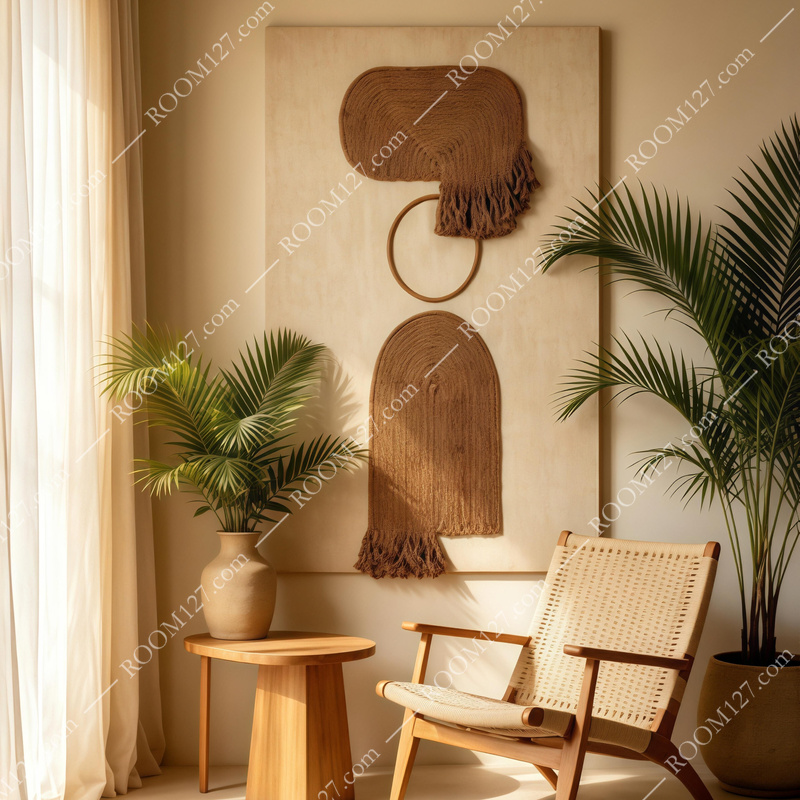
The Reading Nook With Rattan and Palm
Beside a rattan chair, a wooden side table, and palm plants in ceramic vases, the painting feels like it grew there.
The jute echoes the rattan, the linen echoes the curtains, and the warm afternoon light makes the coiled rope glow. This is the space where the piece feels most inevitable.
Living Room
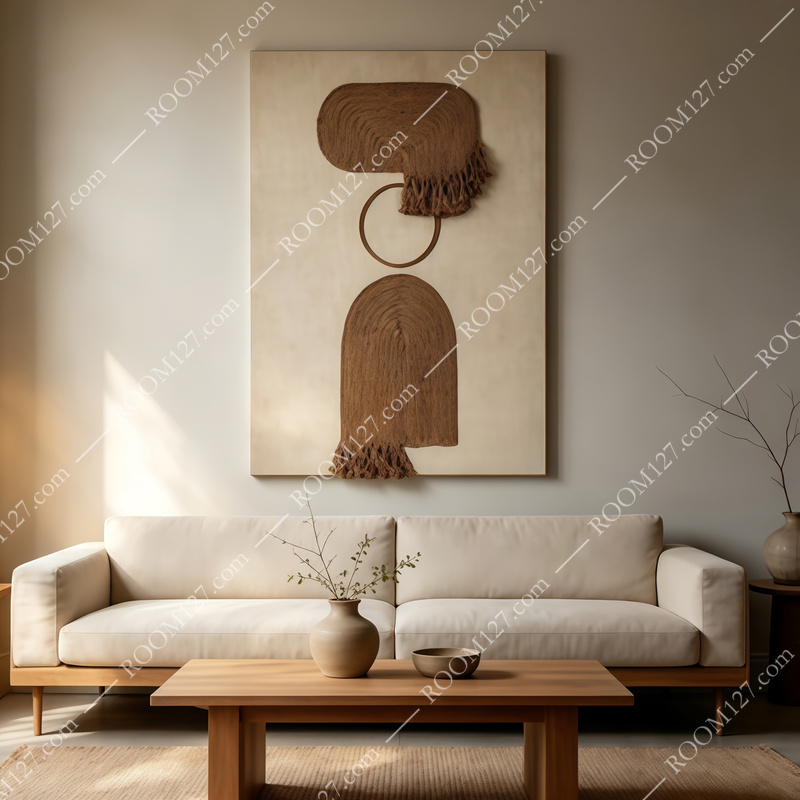
Above a Cream Sofa With Natural Wood
On a plain wall above a cream sofa, a wooden coffee table, and a jute rug, the painting adds vertical structure and tactile warmth.
It is tall enough to fill the wall above a low sofa without overwhelming it, and the neutral palette means it works with almost any existing furniture.
Wellness Space
The Spa or Treatment Room
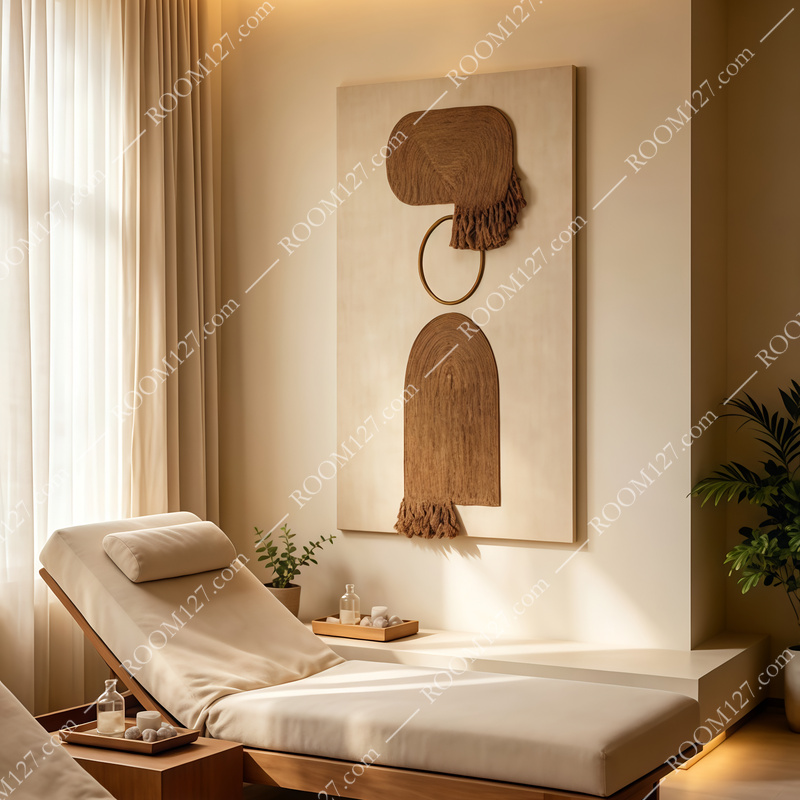
In a room with massage loungers, wooden trays, and warm cove lighting, the painting's calm is not decorative — it is functional. It sets a tone of quiet before a treatment begins, and the natural fiber feels appropriate in a space dedicated to wellbeing. This may be the single best room for it.
Coffee Shop
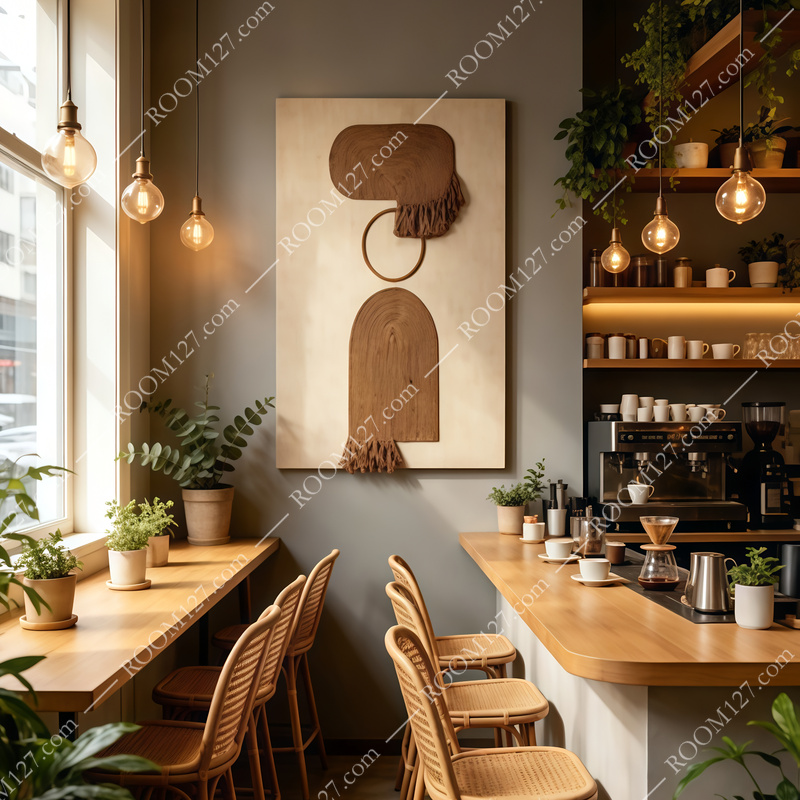
Beside the Espresso Bar
On a wall between a wooden counter and rattan bar stools, under warm pendant lights, the painting adds craft and character to a commercial space. It signals that the space values natural materials and handmade things — values that coffee drinkers tend to share.
Entryway
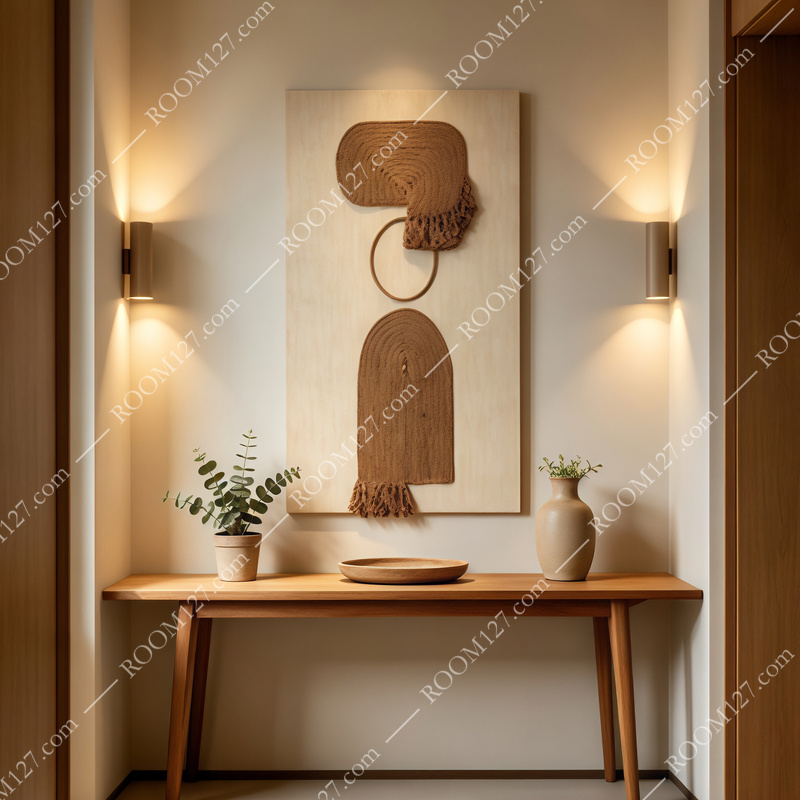
Above a Console Table With Sconces
Flanked by wall sconces and above a wooden console table with ceramic vases, the painting creates a moment of arrival. The vertical format is perfect for a narrow foyer wall, and the warm tones make coming home feel like entering a calm space rather than a hallway.
Library Corner
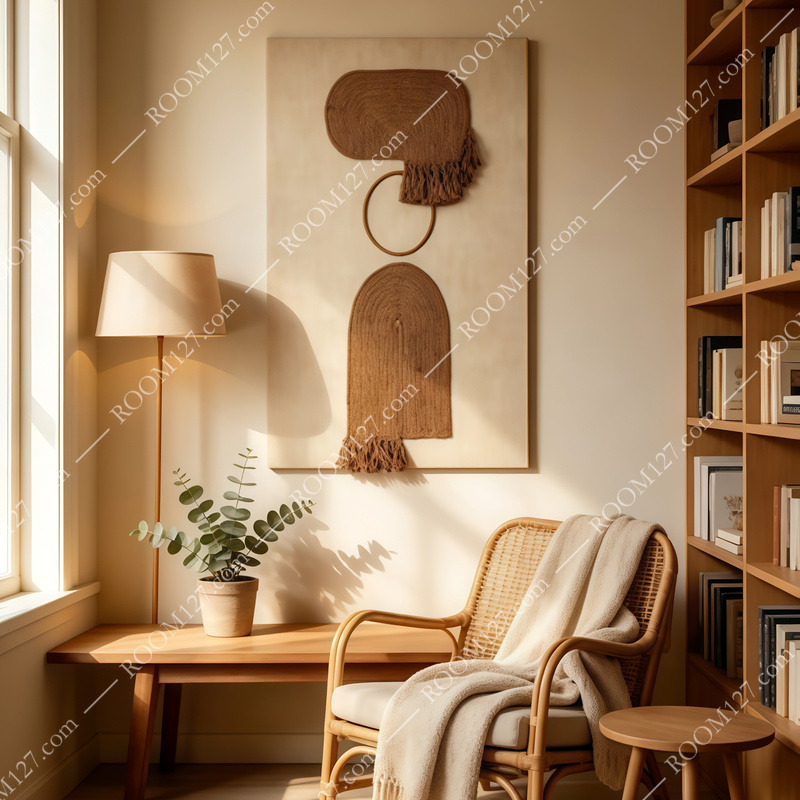
Beside a Bookshelf and Floor Lamp
Next to a wooden bookshelf, a rattan chair with a knit throw, and a floor lamp casting warm light, the painting feels bookish and quiet. It is the kind of art you glance at between chapters, noticing a new detail in the coiled rope each time.
~ ~ ~
How It Is Made
Each piece begins with a stretched linen panel in a warm natural tone. The rope — natural jute or hemp — is then coiled by hand into each shape, starting from the center and working outward in concentric rings. The coiled forms are pinned and glued to the linen. The circle is formed from a single length of rope bent into a ring. The fringes are created by unravelling the end of the rope into loose fibers, then trimming to an even length.
The process is slow and repetitive, and that slowness is part of the finished work. You can see the hand in every coil — slight irregularities in spacing, tiny variations in tension, the way the rope turns at each corner. These are not flaws. They are the evidence of making.
~ ~ ~
Before You Bring It Home
Lighting
Warm, directional light is ideal — a wall sconce, picture light, or side window. The coiled texture needs shadow to read; flat overhead light flattens it.
Placement
Avoid high-humidity rooms (bathrooms, kitchens near steam). Natural fiber can absorb moisture. Best in living areas, bedrooms, and dry commercial spaces.
Cleaning
Dust with a soft dry brush or a vacuum on low suction with a brush attachment. Never wet the rope or linen. Do not use cleaning sprays.
Styling
Pair with natural wood, rattan, linen, jute, and ceramics. It works beautifully in warm minimalism, boho, Japandi, and organic modern interiors.
~ ~ ~
Final Thought
We surround ourselves with screens that glow and surfaces that are perfectly smooth. This painting is the opposite of all of that. It is matte, fibrous, hand-coiled, and quietly imperfect. It does not demand attention. It simply sits on the wall, three shapes made of rope, making the room feel a little more like a place where a person might want to slow down.
If your home feels too fast, too smooth, or too bright, this is the kind of piece that slows it down. And in 2026, that may be the most useful thing a painting can do.
Available now. Each piece is hand-coiled on linen and will vary slightly in coil spacing and fringe texture — the signature of handmade fiber art. Frame depth accommodates the raised rope surface.