
A tree grows from a linen canvas — its roots twisted from jute rope, its canopy studded with real wood slices. It is not a picture of a tree. It is a tree, made by hand, hanging on your wall.
he tree of life is one of the oldest symbols in human culture — roots reaching down, branches reaching up, life cycling between earth and sky. This painting takes that ancient symbol and rebuilds it from real materials: jute rope for the trunk and roots, cross-cut wood slices for the canopy, all pinned to a sheet of natural linen. The result is a three-dimensional object that feels less like decor and more like a small, quiet monument to growth.
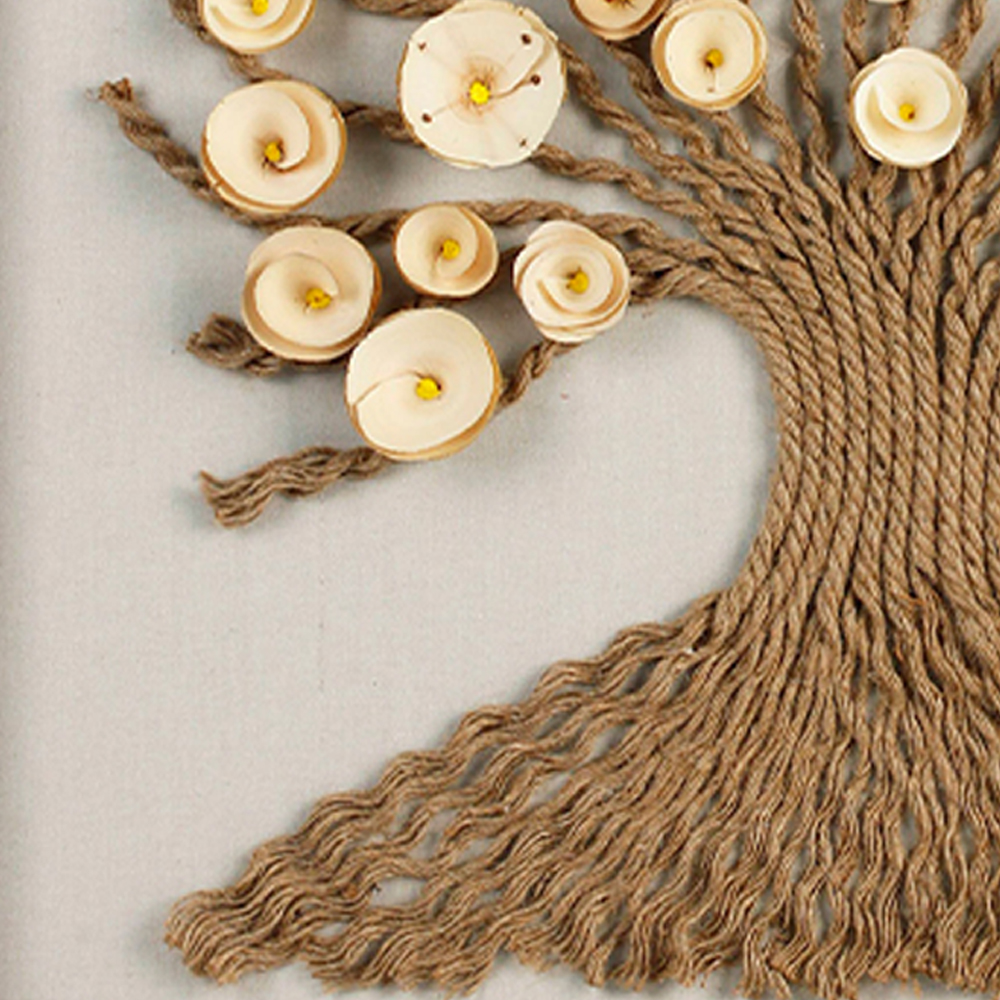
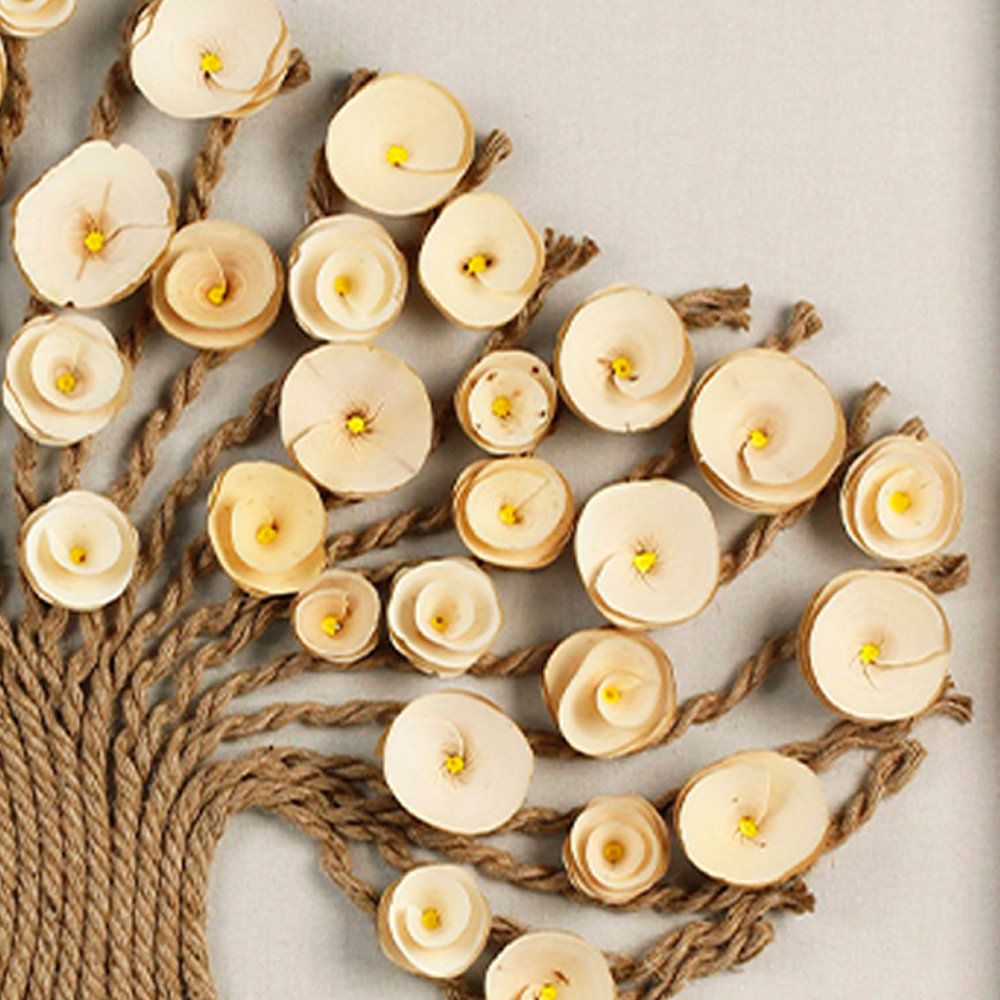
Every element is tactile. The rope is rough and fibrous. The wood slices carry real tree rings — each one a record of a year lived. The linen ground has the subtle weave of fabric. Even the small yellow dots at the center of each wood slice add a tiny spark of warmth, like pollen or sunlight caught in the branches.
❧ ❧ ❧
1Anatomy of the Tree
Understanding the piece means looking at its three materials, each with a different role and a different texture.
🌿
Rope Roots
Twisted jute forms the trunk, branches, and exposed roots — rough, fibrous, and deeply three-dimensional.
◎
Wood Rings
Cross-cut wood slices of varying sizes form the canopy, each carrying real growth rings and a warm yellow center.
▦
Linen Ground
A light natural linen canvas provides a soft, woven background that makes the raised tree appear to float.
Each wood slice is a small record of a real tree's life — a year of rain, a year of sun, a year of growth. When you look at this painting, you are looking at dozens of small biographies arranged into one larger symbol.
The composition is a classic tree of life: a thick trunk rising from a spread of exposed roots, branches curving outward and upward, and a full rounded canopy. But the materials transform the familiar symbol into something genuinely new. The rope gives the trunk a sense of tension and strength. The wood slices give the canopy a mosaic-like richness. The linen ground ties everything together with a quiet, fabric softness.
❧ ❧ ❧
2Why a Tree of Life, and Why Now
In a moment when so much of life feels digital and disconnected, the tree of life carries a particular weight. It is a symbol of rootedness and growth at the same time — of being connected to where you come from while still reaching toward something new. That duality feels relevant in 2026, when many people are rethinking what home means and what they want to surround themselves with.
This painting does not lecture. It simply presents the symbol in real, tactile materials, and lets the meaning arrive quietly. A tree made of wood and rope is, in some sense, a tree made of trees — a small circularity that rewards slow looking.
The Symbol in Everyday Spaces
The tree of life works in virtually any room because it carries meaning without being specific to any one religion or culture. It is a universal symbol of family, growth, strength, and connection. In a bedroom, it feels personal. In a dining room, it feels communal. In an entryway, it feels like a welcome. In a cafe, it feels like a reminder to slow down.
❧ ❧ ❧
3Where It Takes Root
Bedroom
Above the Bed, Beside the Morning Light
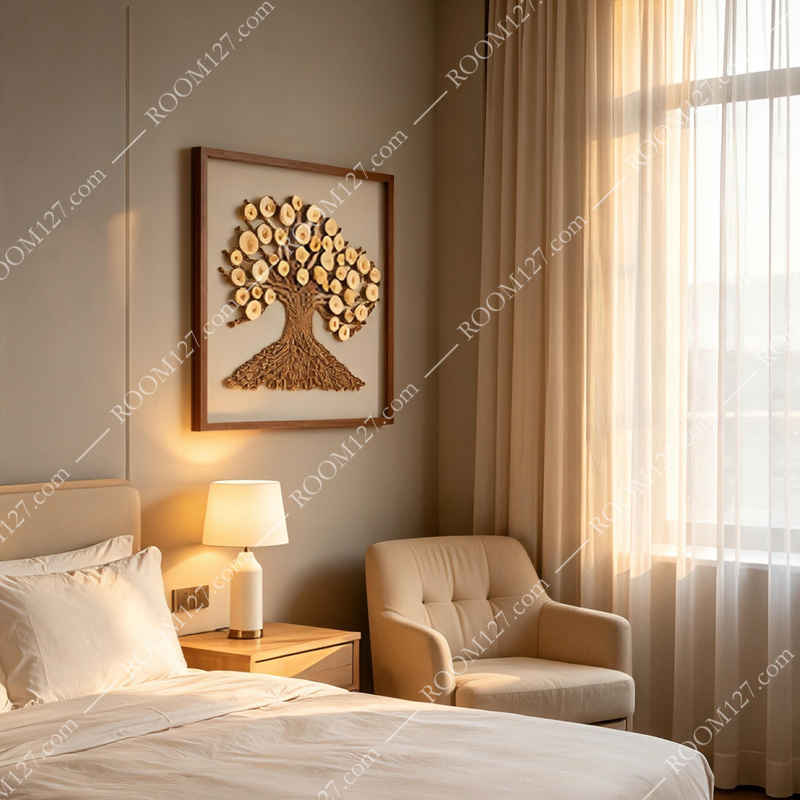
On a warm wall above a beige headboard and white bedding, beside a wooden nightstand with a lamp and an armchair by the window, the painting feels personal and grounding. It is the last thing you see before sleep and the first thing you see when you wake — a quiet reminder of growth and rootedness. The warm wood tones echo the bedside furniture.
Coffee Shop
Behind the Counter, Above the Cups
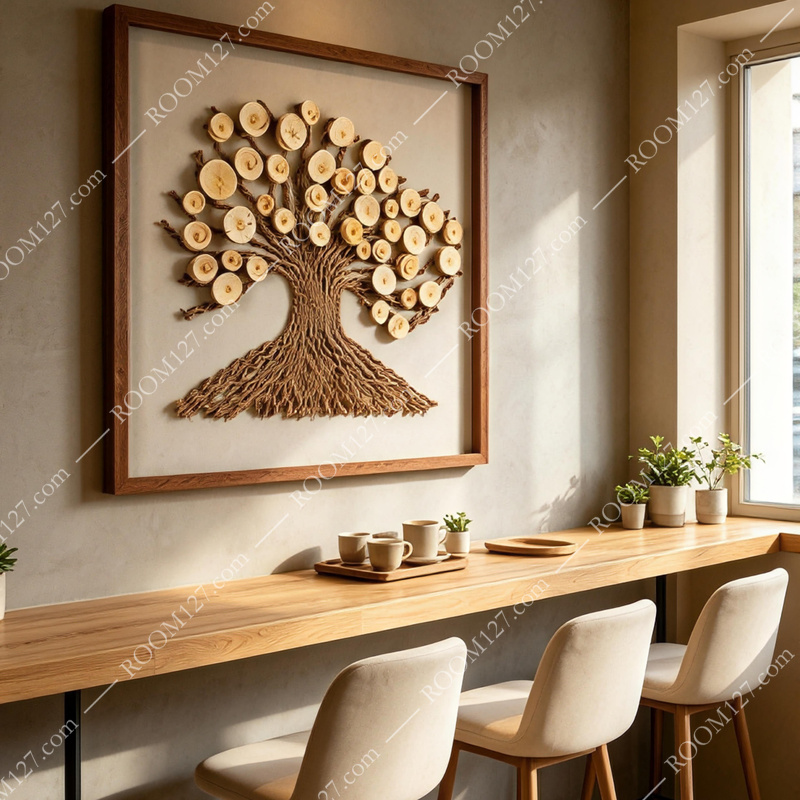
On a wall behind a wooden counter with beige bar stools, coffee cups, and plants, the painting adds natural character to a commercial space. The wood slices echo the wooden counter, the rope adds texture, and the tree of life symbol feels appropriate in a space where people gather, slow down, and connect. Customers will photograph it.
Flower & Craft Room
Beside the Vases and the Scissors
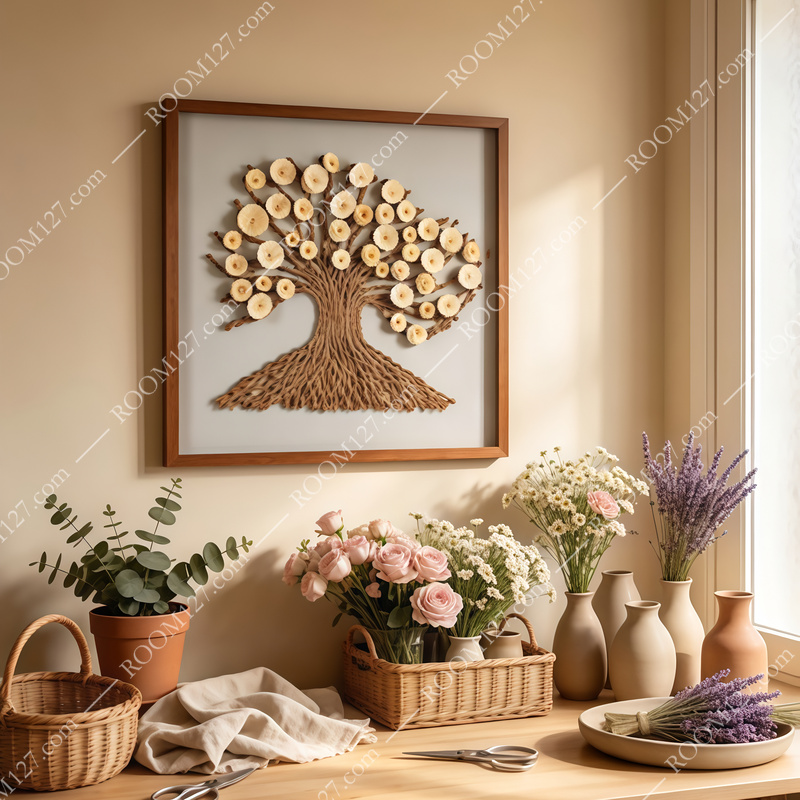
In a sunlit room with a wooden table covered in vases of roses, lavender, and baby's breath, eucalyptus in a terracotta pot, baskets, and scissors, the painting feels like it belongs to the craft itself. It is a handmade object in a room full of handmade things. The natural materials mirror the flowers and foliage, and the tree of life symbol feels right in a space dedicated to growth and arrangement.
Entryway
Above the Console, Beside the Sconce
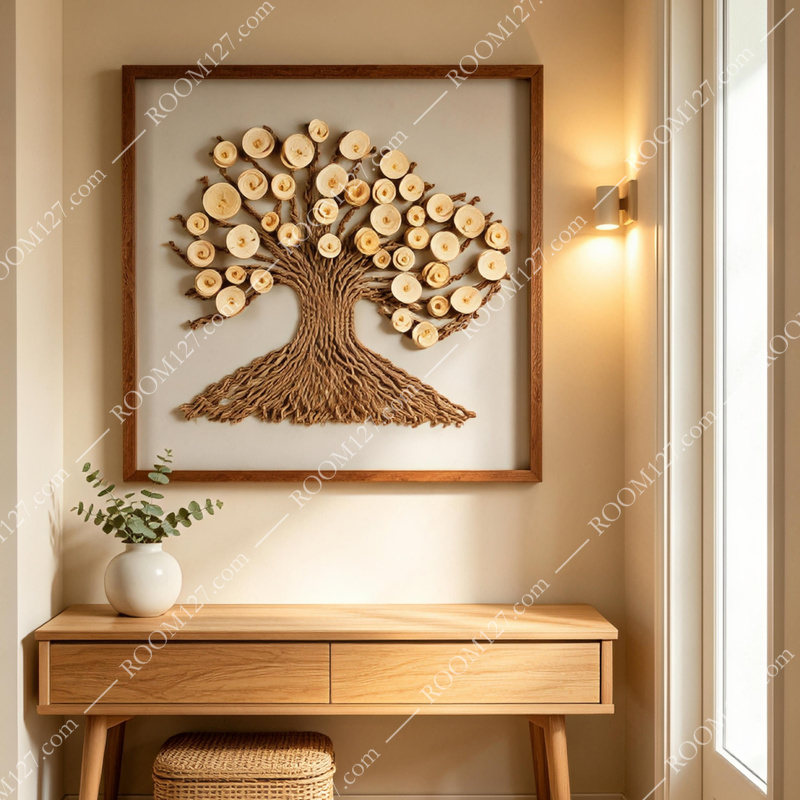
Above a wooden console table with a wicker basket underneath and a plant in a white vase, flanked by a wall sconce, the painting creates a moment of arrival. The tree of life is a natural symbol for an entryway — it speaks of roots and homecoming. The square format fits a narrow foyer wall perfectly, and the warm materials make coming home feel like entering a nurturing space.
Dining Room
Above the Table, Beneath the Pendant
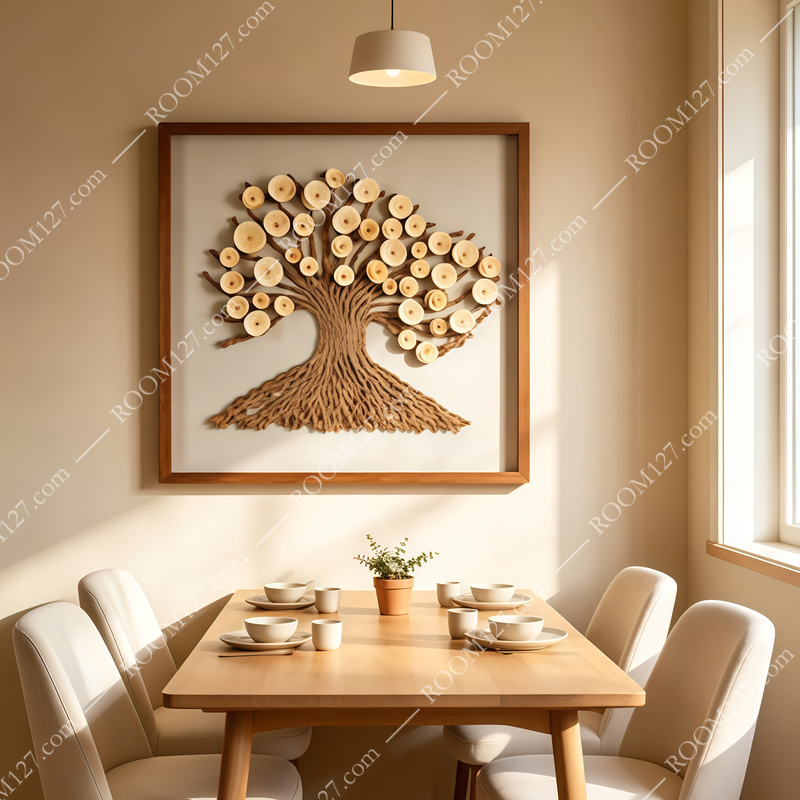
Above a wooden dining table with white upholstered chairs, a pendant light, and simple tableware, the painting adds warmth and symbolic depth to a space of gathering. The tree of life is inherently communal — it speaks of family, generations, and shared roots. Meals shared beneath it feel slightly more meaningful. The wood tones echo the table, and the linen ground softens the whole room.
Living Room
Above the Sofa, Among the Baskets
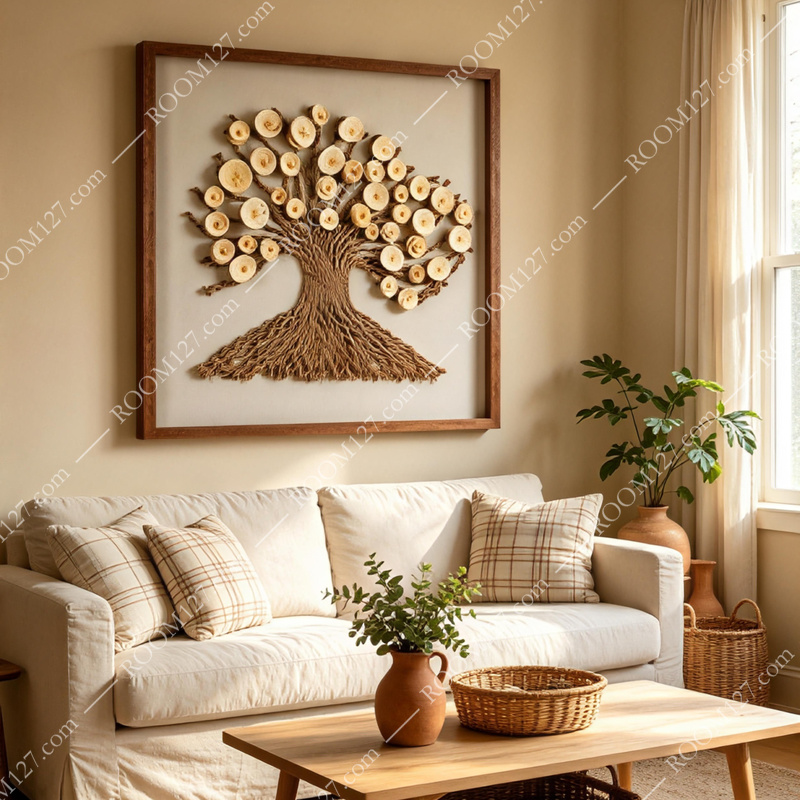
Above a cream sofa with plaid pillows, a wooden coffee table, wicker baskets, and a plant by the window, the painting feels like the natural centerpiece of a collected home. The rope and wood materials echo the baskets and wooden furniture, the tree of life symbol adds meaning without overwhelming the space, and the square format sits perfectly above a low sofa. It is the kind of art that ties a room together.
❧ ❧ ❧
4How It Grows
Each piece begins with a stretched linen panel in a soft natural tone. The trunk and roots are then formed from jute rope — twisted, coiled, and arranged by hand to create the tree's structure. The rope is pinned and glued to the linen, rising a full centimeter from the surface. Branches extend from the trunk in gentle curves.
The canopy is built from wood slices — cross-sections of small branches and twigs, each sanded smooth to reveal the growth rings. The slices vary in size from small twig cross-sections to larger branch cuts, creating a full, rounded canopy. Each slice is pinned to the linen with a small yellow dot at its center, adding a consistent warm accent. The process is slow and meditative, and each tree is slightly different — the wood slices vary, the rope curves differently, the canopy has its own shape.
❧ ❧ ❧
5Before You Bring It Home
Lighting
Warm, directional light makes the raised rope and wood slices cast soft shadows — this is when the piece looks its best. A wall sconce, picture light, or side window is ideal. Avoid direct harsh sunlight, which can fade the linen and dry out the rope over time.
Placement
Natural materials prefer stable, dry environments. Avoid bathrooms, kitchens near steam, or exterior walls with condensation. The square format (80x80 cm) is versatile — it works above low furniture, in narrow foyers, and on walls where a wide piece would not fit.
Cleaning
Dust gently with a soft, dry brush or a vacuum on low suction with a brush attachment. The wood slices and rope are delicate — never use water, cleaning spray, or a damp cloth. The linen ground can be lightly brushed if dust accumulates.
Styling
Pairs beautifully with natural wood, rattan, linen, jute, ceramics, and plants. It shines in warm minimalism, boho, rustic, Japandi, organic modern, and cottagecore interiors. In a cool-toned room, it introduces needed warmth and natural texture.
❧ ❧ ❧
6Final Thought
We surround ourselves with images of nature — photographs of forests, prints of leaves, paintings of landscapes. But an image of a tree is not a tree. This painting comes closer than most: it is made from the actual materials of a tree, arranged into the shape of a tree, and raised from the wall like a small relief sculpture. It carries the smell of wood and rope, the texture of fiber and grain, the quiet weight of a symbol that has meant something to humans for thousands of years.
If your walls feel flat, digital, or disconnected from the natural world, this is the kind of piece that changes that. It does not shout. It simply grows, quietly, on your wall — a small reminder that roots and branches are not opposites. They are the same life, reaching in two directions.
Available now. Each tree is hand-assembled from natural jute rope and real wood slices on linen. Wood slice sizes, grain patterns, and canopy arrangement will vary — every tree is unique, just like the ones growing outside.