
Imagine walking into a room.
The sofa is new, the floors are clean, the light is perfect.
Then you look at the wall — and the art on it feels like an afterthought.
That's what happens when animal art goes wrong.
Here's how to make it go right.
Mistake #1: It Looks Like a Photograph
You know the feeling.
You walk into a room and there it is:
a horse. But it's too much a horse. Every muscle defined, every hair in place, the leather tack gleaming.
It looks like a photo you'd see in a riding magazine — blown up to poster size and stapled into a frame.
Your eyes move over it in two seconds flat.
You think "nice horse" — and then you're looking at the sofa.
There's nothing to come back to. Nothing that makes you stand still for a moment.
The problem:
It reads as decoration, not art. It's a horse, but it's only a horse. No brushwork, no style, no artist's hand. It could be printed on a mug. It could be a calendar.
What good looks like:
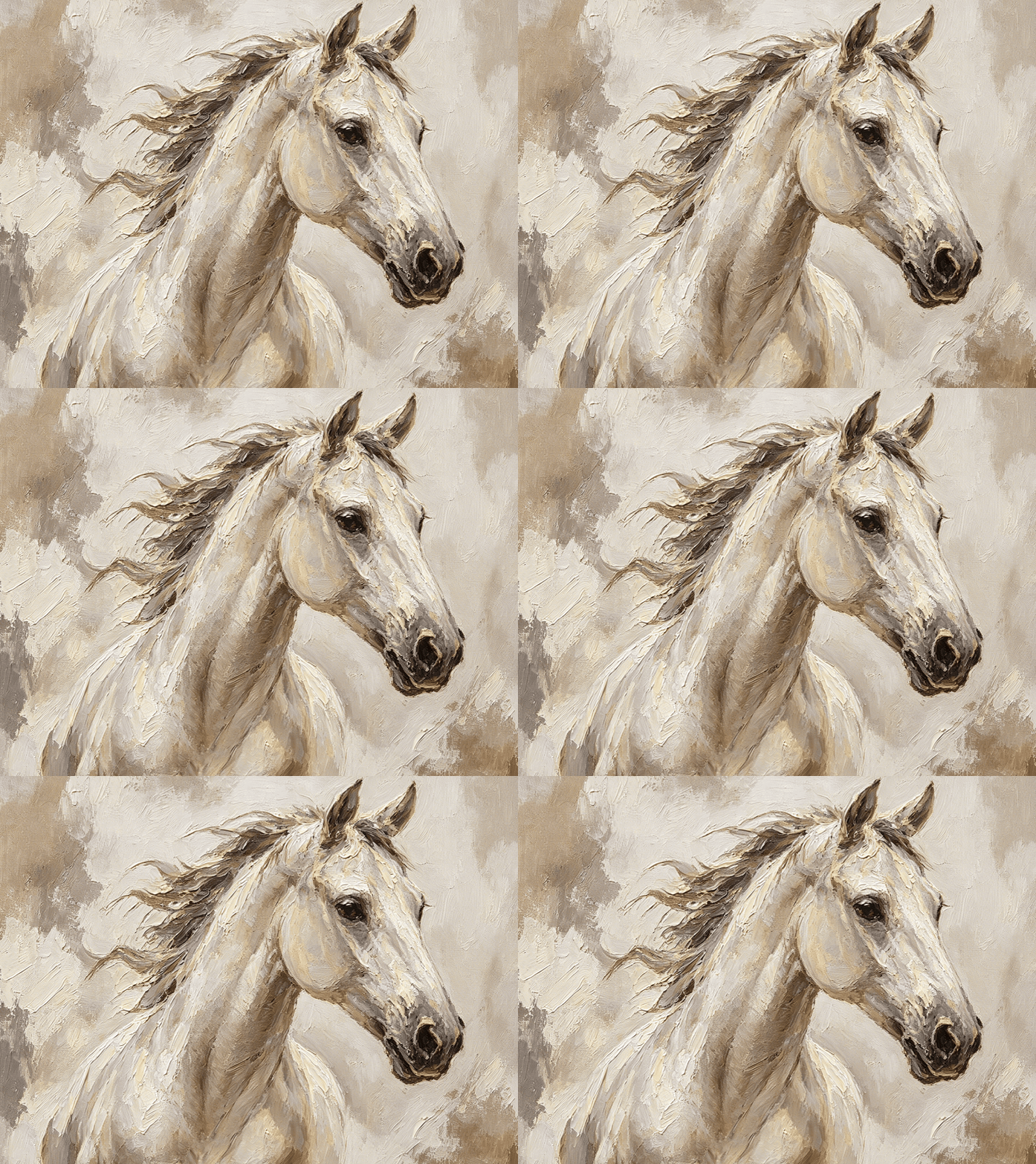
Suggestion, not detail. You know it's a horse — instantly, without thinking. But you also see the painting: the way the mane flies in thin, directional strokes; the way the background dissolves into brown and grey like dust kicked up from hooves; the way the horse itself is rendered in layers of white and cream and light grey.
This is the difference between looking at a horse and feeling it. You don't see every hair. You feel the speed. You feel the power. You feel the wind.
Mistake #2: It's Too Cute
Picture this. You're standing in a friend's living room.
They've just renovated — oak floors, a linen sofa, a leather chair that cost real money.
Then you look at the wall, and there's a horse. But it's a cute horse. Big eyes, soft edges, almost cartoonish.
You smile politely. You say "nice painting." But you're thinking: this belongs in a nursery. Not in a room where someone paid five figures for the furniture.
The problem:
Cute ages badly. A two-year-old's room? Fine. A ten-year-old's room? Fine. But a grown-up's study? A living room where guests gather? A hotel lobby that should feel sophisticated? It doesn't work. It reads as juvenile. It undermines everything else in the room.
What good looks like:
Confidence, not cuteness. This horse isn't posing for you. It's running. Its head is turned slightly — not to say hello, but because it's in motion. The expression is calm, direct, almost stern. It doesn't beg for your attention. It simply is.
That's the feeling you want. The kind of painting where a guest walks in, pauses, and walks closer to see the brushwork — not because it's adorable, but because it's real.
Mistake #3: The Colors Fight Your Room
Close your eyes. Imagine your living room.
Warm wood floors, a cream sofa, beige walls, a jute rug.
Now imagine hanging a bright red horse painting on that wall.
Your eyes snap to it immediately. T
oo immediately. It's not a painting in the room — it's a scream. Everything else fades away.
The sofa, the bookshelf, the lamp, the plant in the corner — all of it becomes background to that one loud patch of red.
The problem:
You'll get tired of it. Bold colors date fast. And if you ever repaint the walls, or buy a different sofa, or move to a new apartment — that painting is suddenly the one thing in the room that doesn't work.
What good looks like:
Muted, earthy tones. This painting uses warm beige, soft grey, and earth brown. All of it low-saturation. All of it quiet.
Hang it on a beige wall — it blends in like it was always meant to be there. Hang it on a dark grey wall — it pops, but gently. Hang it above a wood desk, a stone console, a cream sofa — everything works. It doesn't fight. It complements.
What Makes This Horse Work
So what does a "good" animal painting actually feel like when you stand in front of it?
You walk into the room.
Your eye lands on the wall.
You stop walking.
You look at the horse for a few seconds — not because you're analyzing it, but because something about it feels alive.
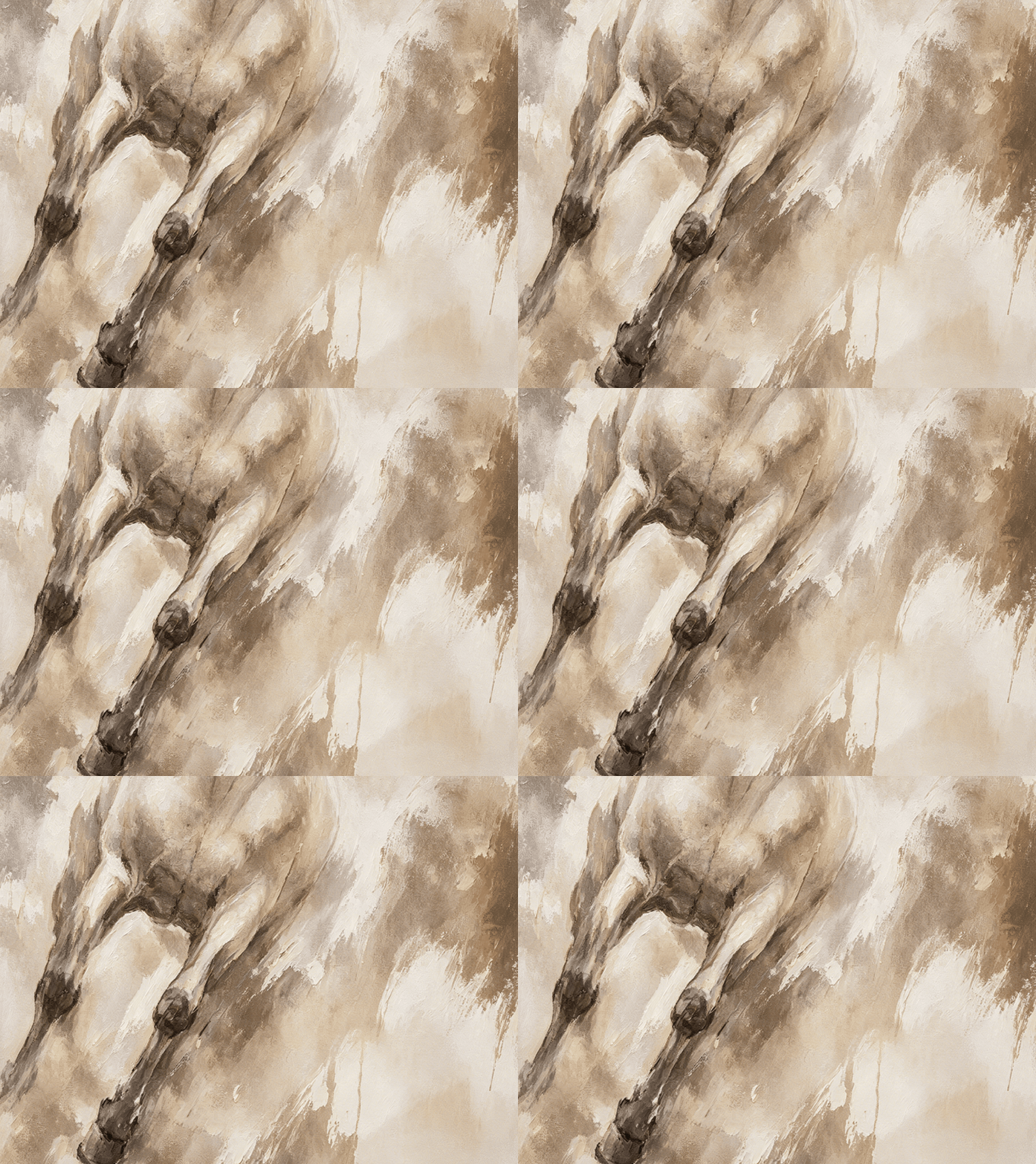
The mane is flying.
The front legs are reaching.
The background is dissolving.
You can almost hear the hooves on dirt.
✅ You know it's a horse — instantly, no explanation needed.
✅ But it's clearly painted — you can see the brushwork, the texture, the artist's hand.
✅ The palette is quiet — warm neutrals that go with everything.
✅ The subject has presence — the horse feels powerful, not cute or clichéd.
✅ It works in grown-up rooms — living rooms, studies, lobbies. Not just nurseries.
Where to Hang It
We hung it in six spaces. Stand in each one mentally:
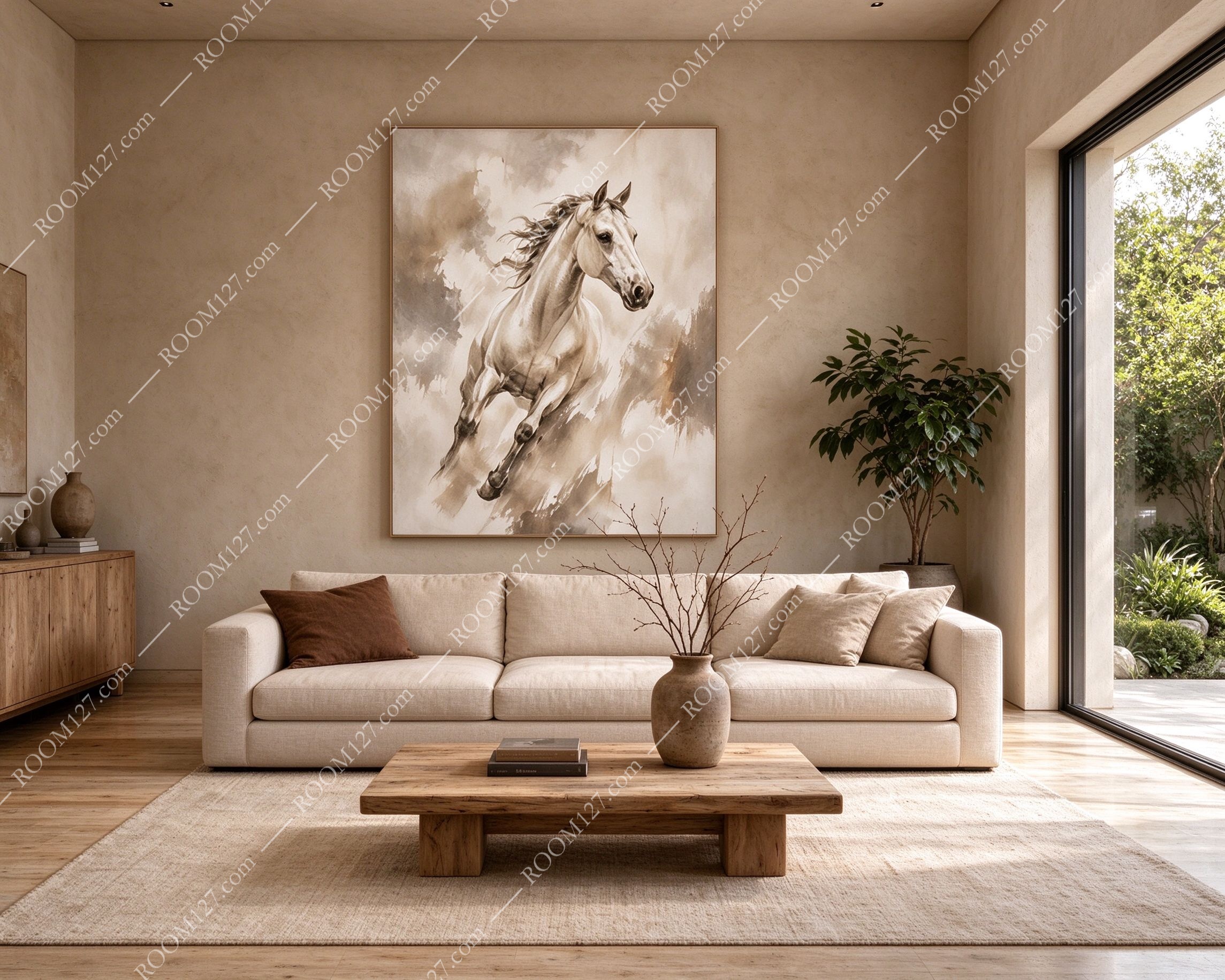
🏠 Wabi-sabi living room
You walk in.
Warm afternoon light through the window.
A linen sofa, rough wood coffee table, a ceramic vase with bare branches.
Above the sofa, the horse painting.
The warm beige tones match the textured walls.
It feels like it's always been there — not hung on, but built in. You sit down. You look at the horse. You relax.
📚 Wood-paneled study
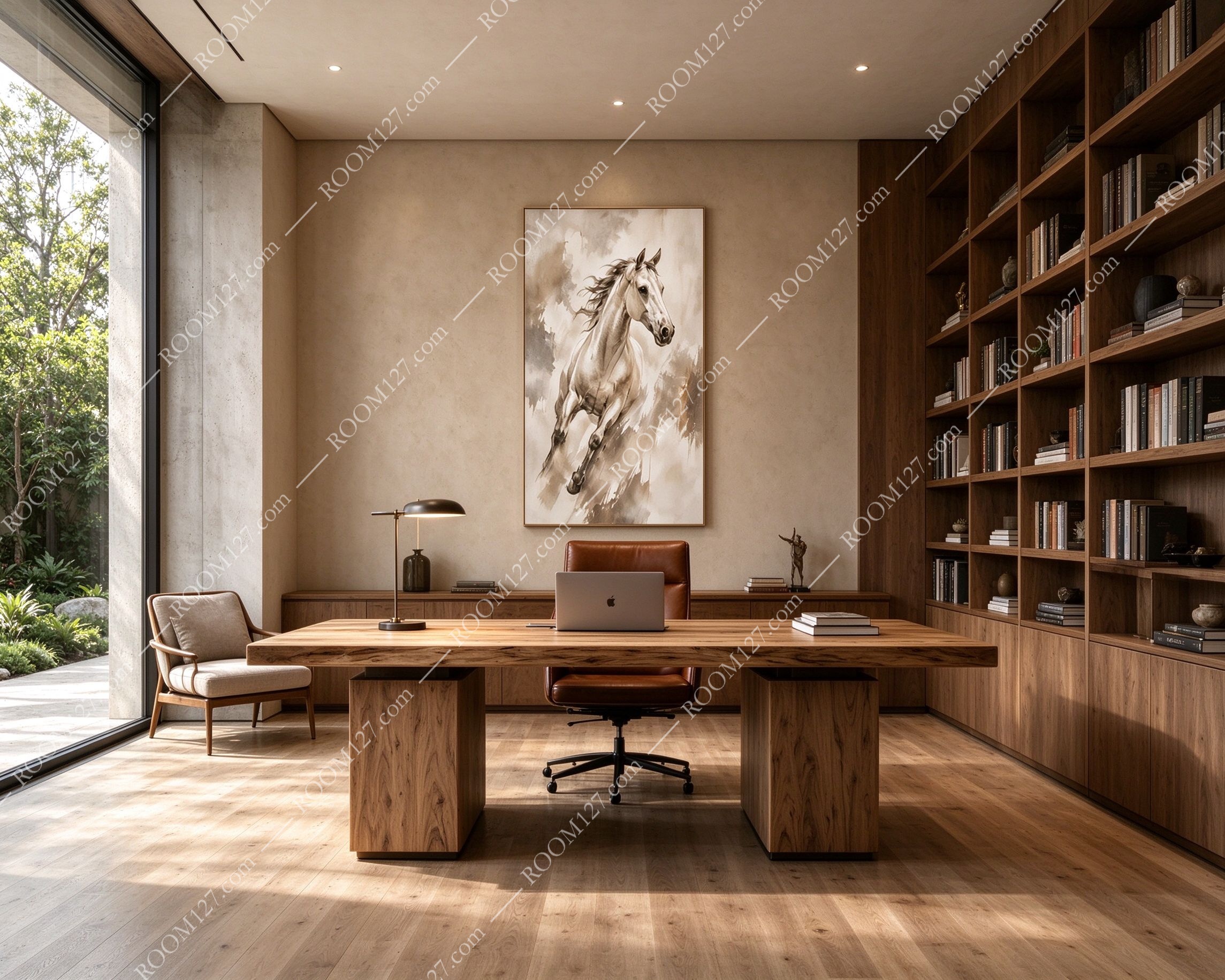
You sit at your desk.
Leather chair, brass lamp, bookshelves full of old books.
You look up from your laptop.
The horse is on the wall in front of you.
It's moving. It's going somewhere. Somehow, that quiet energy makes you want to get back to work.
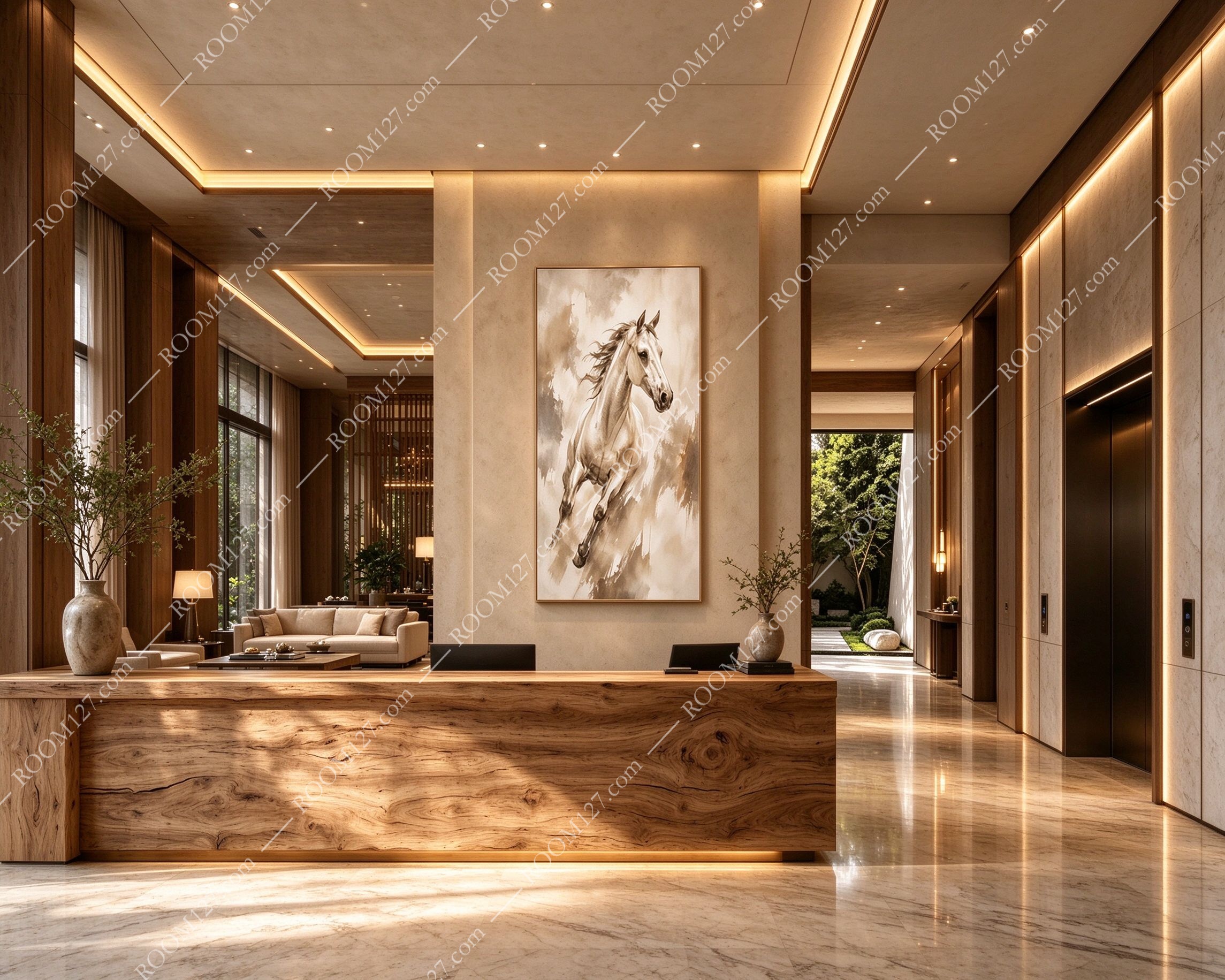
🏨 Hotel lobby
You walk in off the street.
Double-height ceiling, stone floors, a massive wood reception desk. A
bove the desk, the horse painting. It's the first thing you see.
It says: this place has taste.
It says: we care about details. You check in. You remember the painting.
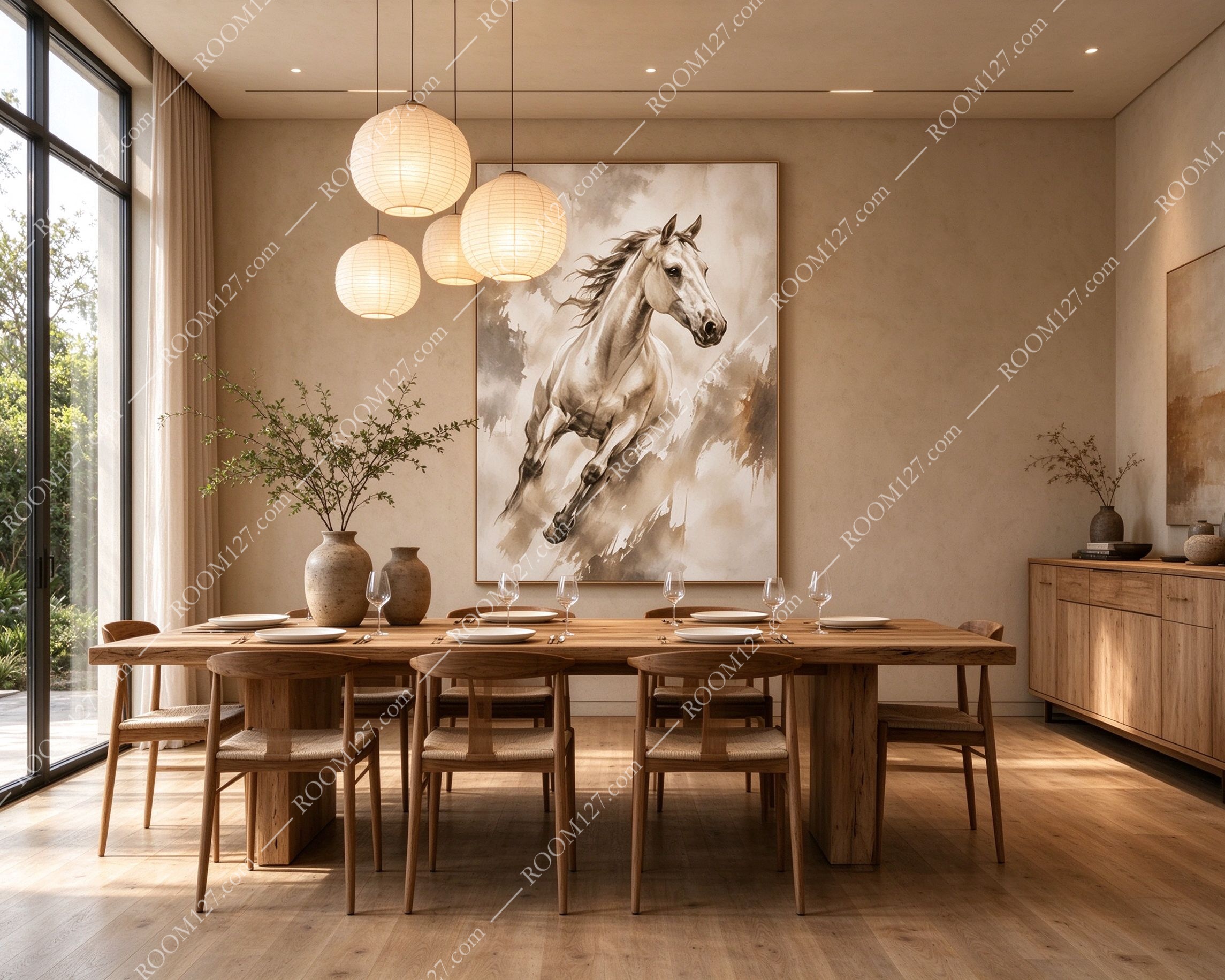
🍽️ Dining room at dusk
The table is set. Candlelight.
Paper lanterns glow overhead.
Above the table, the horse painting.
In the dim light, the warm tones glow.
The horse seems to move between the shadows.
Dinner feels intentional. Special.
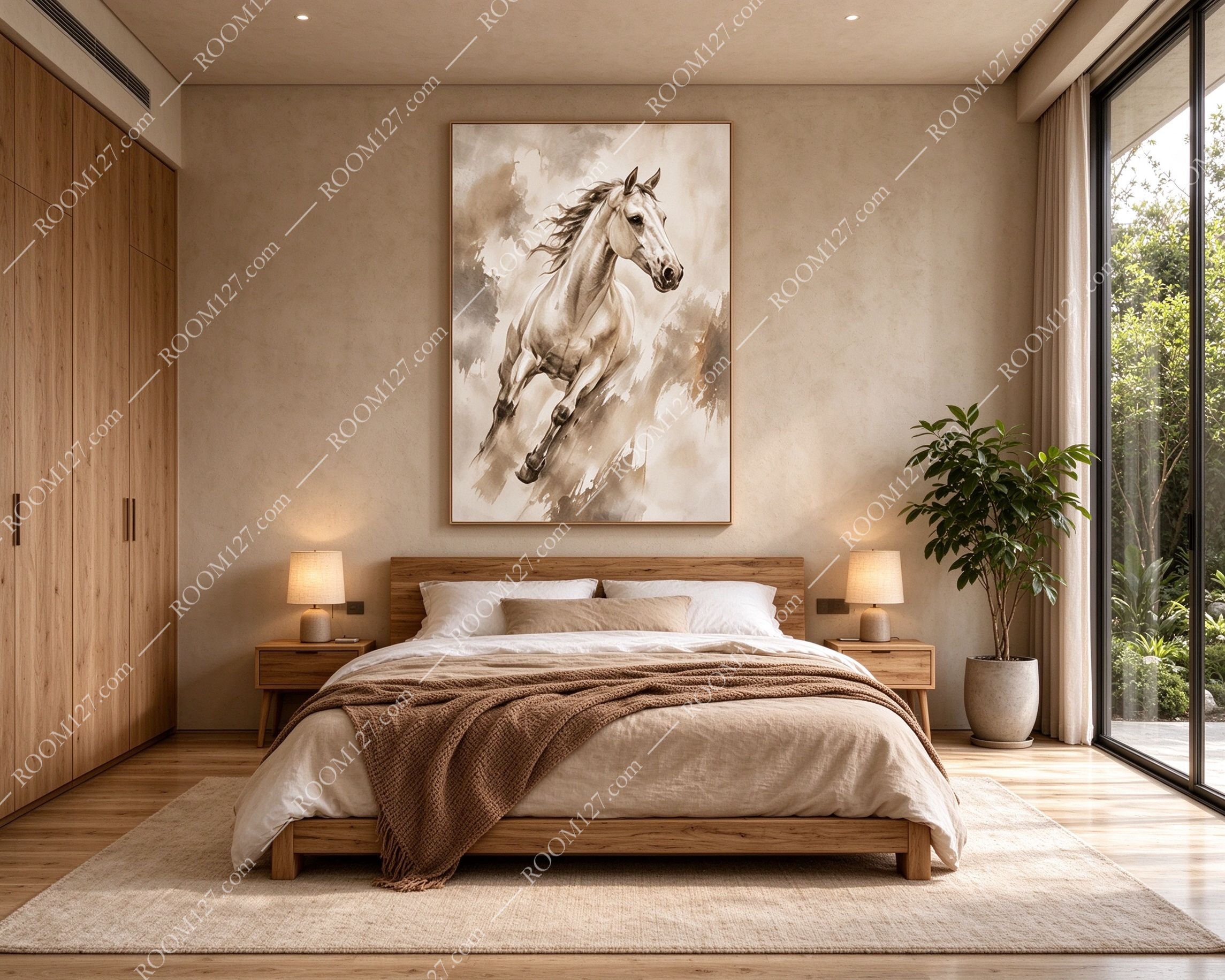
🛏️ Bedroom in the morning
You wake up.
Light through the curtains.
You look up.
The horse is above the bed. In soft morning light, the muted tones are calm.
It's not energizing.
It's peaceful.
The first thing you see when you open your eyes — and it doesn't jolt you awake. It just… is.
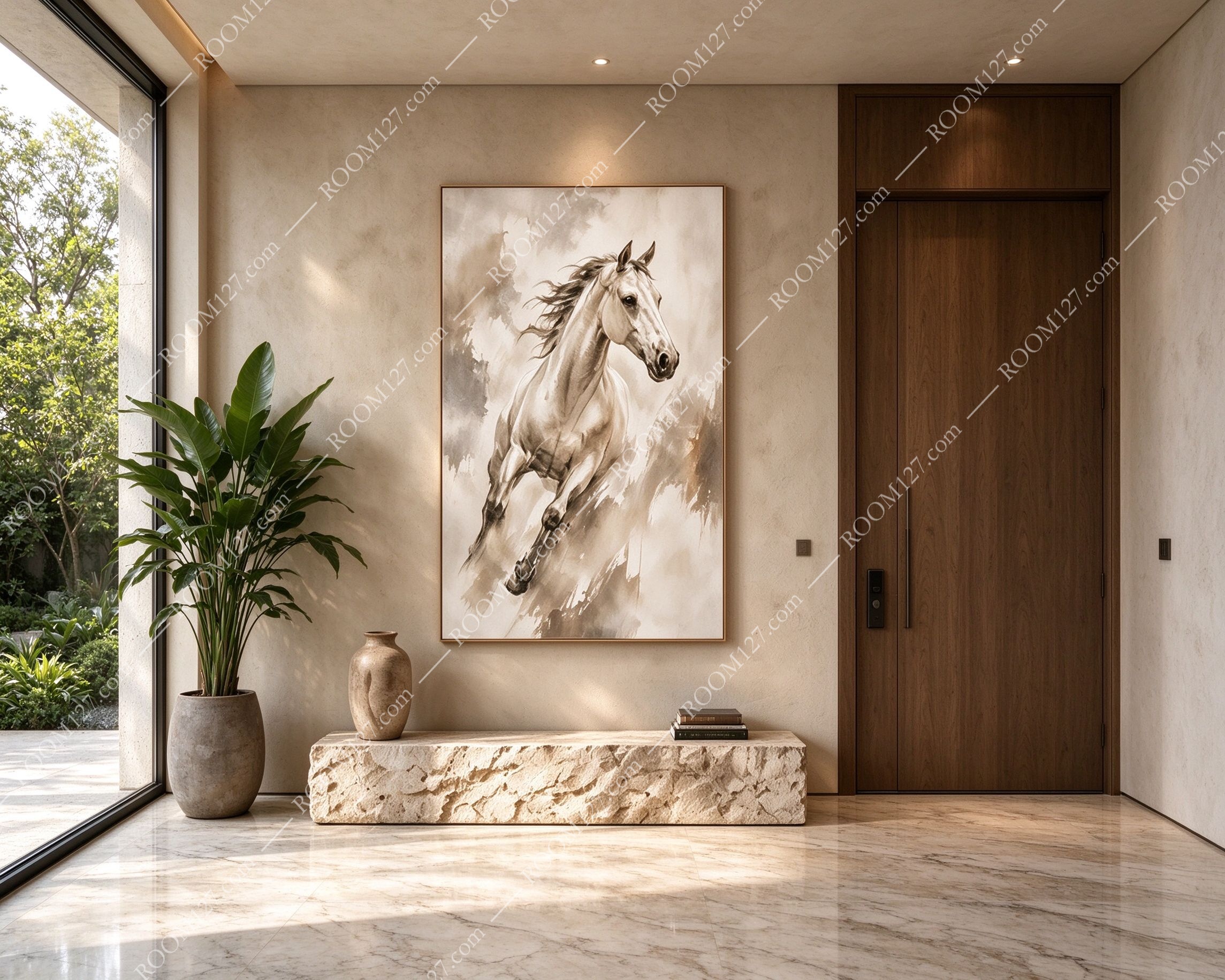
🚪 Entryway
You open the front door.
The first thing you see is the horse painting on the wall.
It's your first impression of the space.
It's strong.
It's elegant.
It says: this home has character.
Guests feel it immediately.
Good animal art doesn't just show you an animal.
It makes you feel like you're standing in the same room as it.