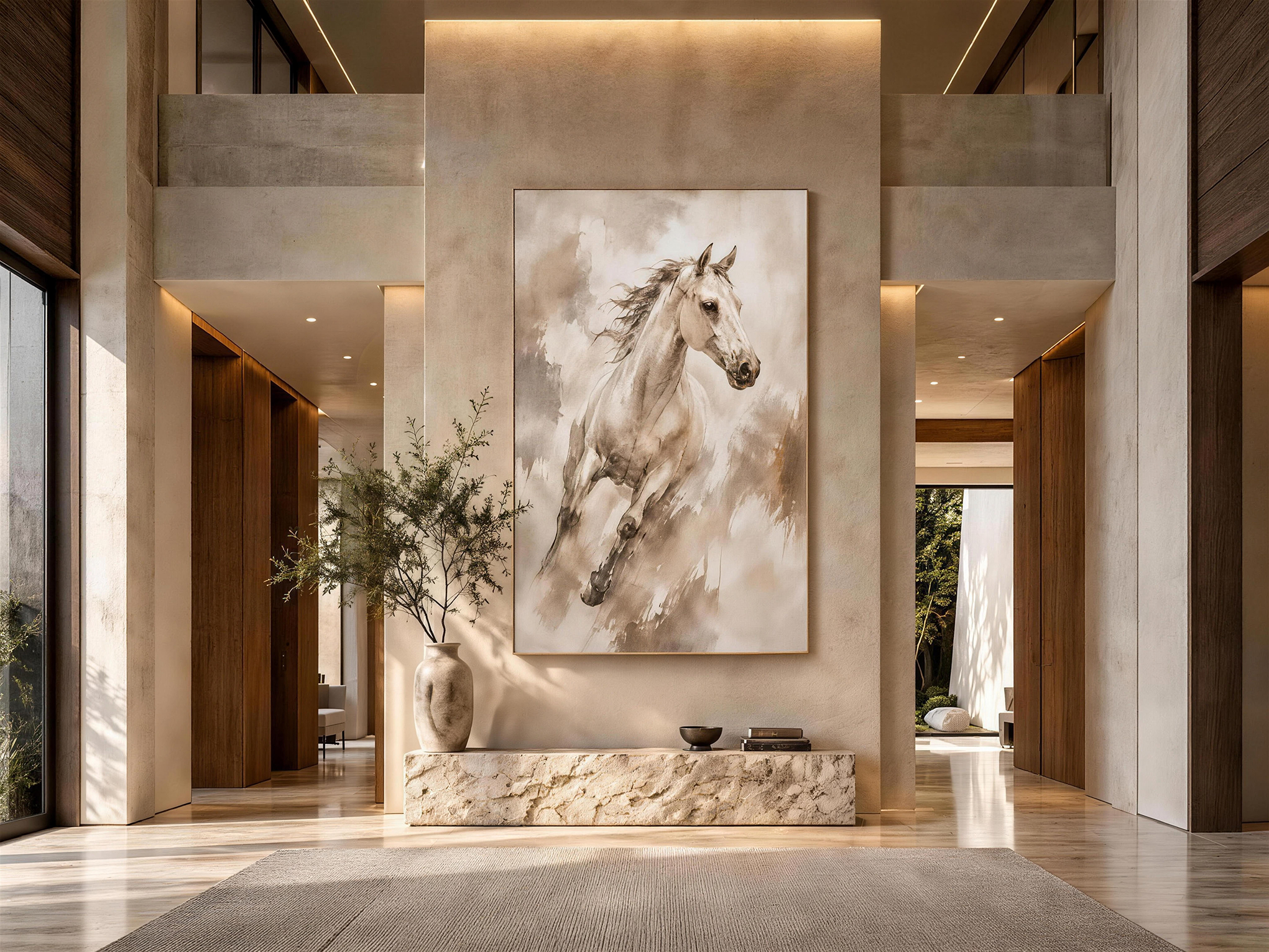
The Project
Last year we worked on a meeting center project at the foot of a mountain, converted from an old tea warehouse. The owner, Chen, had spent over a year on the renovation — exposed concrete ceilings, raw wood doors, warm white walls, big windows looking out at the rocky mountain ridge. The building looked great. But when he called us, he sounded frustrated.
"Everything is finished," he said. "The meeting rooms work, the café works, the lighting is right. But the lounge area by the entrance — people walk through it, check in at the desk, and go straight to their meetings. Nobody sits down. Nobody looks around. It feels like a hallway, not a lounge."
Space at a Glance
Building
AgeFormer tea warehouse, 40+ years old
StyleMinimalist — concrete grey, raw wood, warm white
The Problem Area4-meter concrete pillar facing the entrance
Foot TrafficConference attendees, corporate clients, daily visitors
◆ ◆ ◆
The Problem
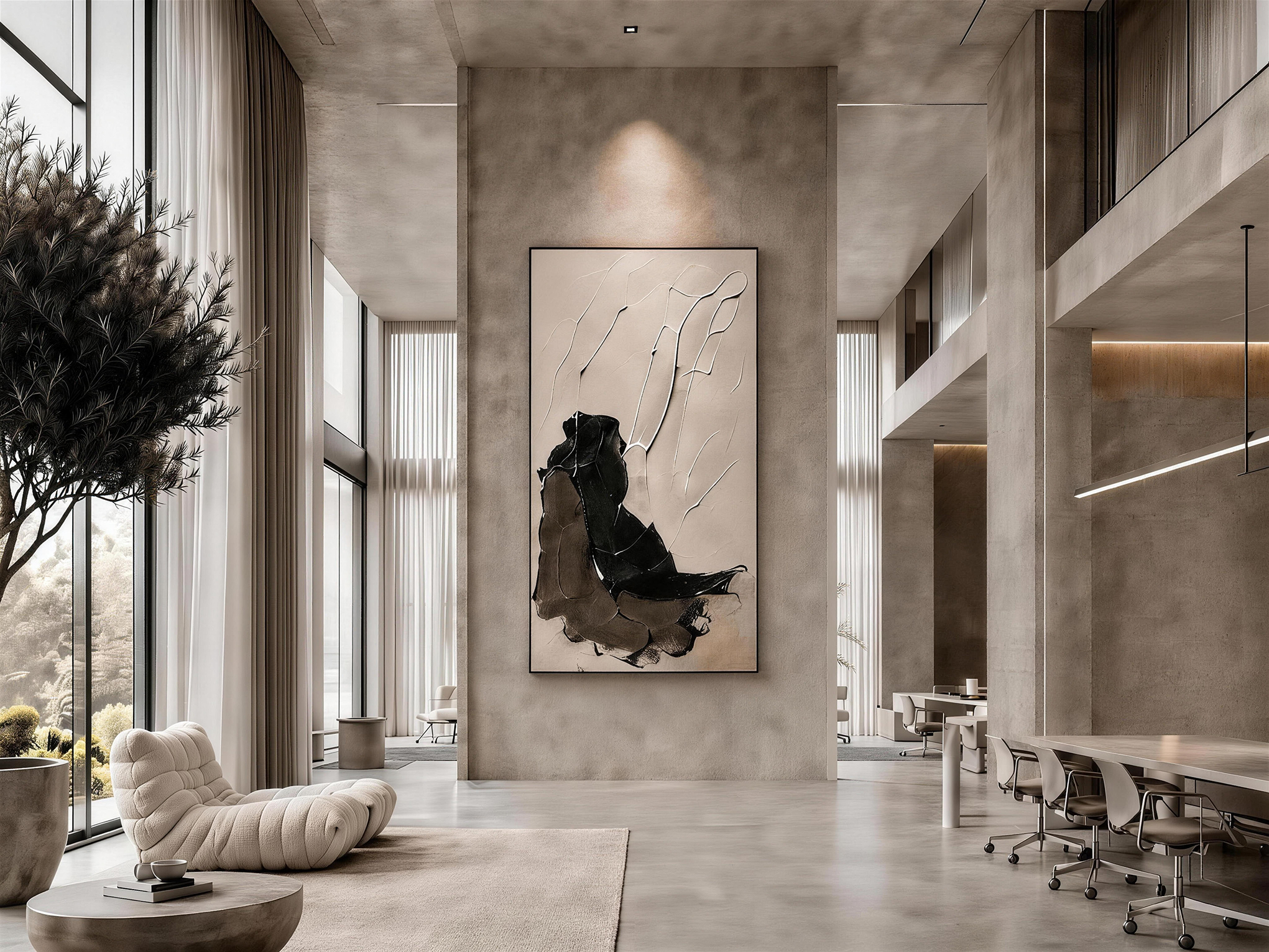
We took one look at the space and the issue was obvious. Directly facing the entrance, there was a four-meter-tall concrete pillar — bare, grey, nothing on it. It was the first thing people saw when they walked in, and it was completely blank.
What They Tried Before
They had hung a regular printed canvas there initially. But the pillar faces the windows, so direct sunlight hit it all morning. The surface glared, the colors faded within six months, and eventually they took it down. The pillar stayed empty after that — and the whole lounge felt unfinished.
The rest of the room was doing its job. There were comfortable sofas, a small coffee station, side tables with reading material. But without something on that central pillar, the eye had nowhere to land. People walked in, scanned the room, found nothing to hold their attention, and moved on. A lounge without a focal point is just a corridor with chairs.
◆ ◆ ◆
The Solution
The answer was not another print. It was a large-scale hand-painted oil painting covering the entire pillar — something with real paint texture, real shadow, and a surface that would not glare in sunlight.
Because Chen's whole meeting center is minimalist — concrete grey, raw wood, warm whites — the piece could not be too busy or colorful. We designed an abstract landscape split into two halves:
The bottom half was done in deep, thick impasto brushwork, dark earth tones, evoking the local rocky mountains at the base. The top half was left light, with fine layered brushstrokes suggesting mountain ridges that line up with the actual view outside the window. The idea was that someone standing in front of the piece could look up, see the painted ridges, then look through the window and see the real mountains continuing the same lines.
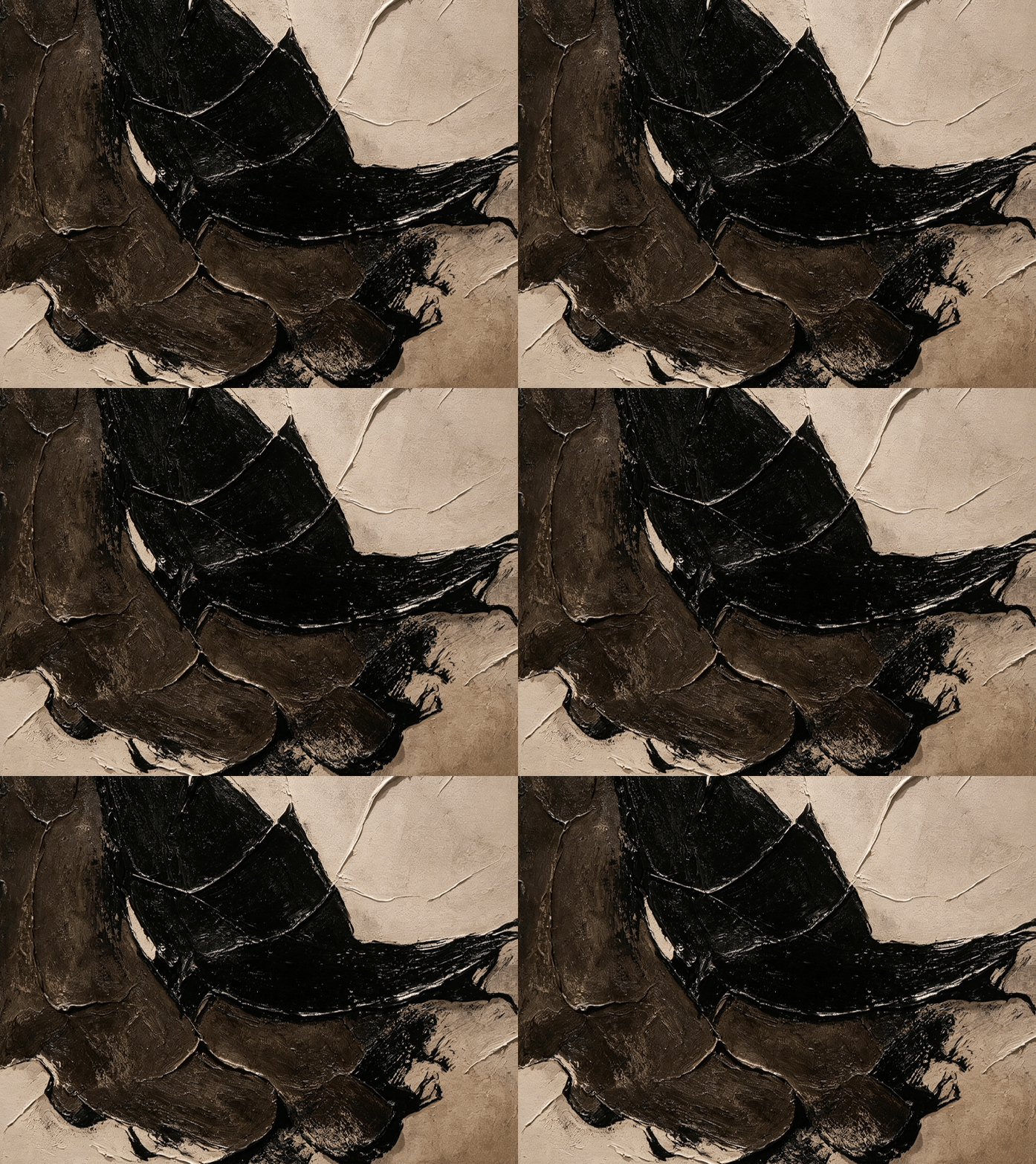
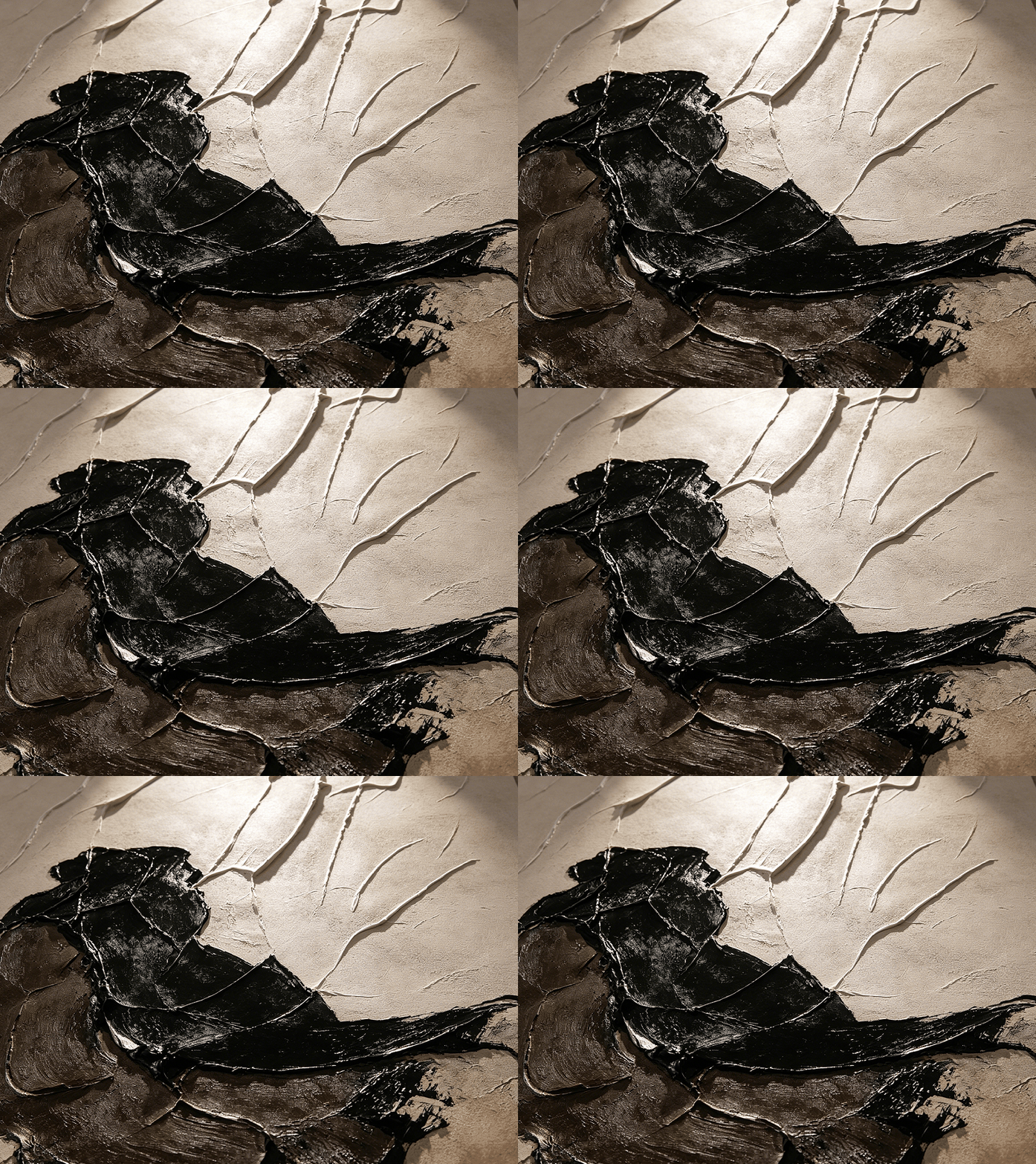
Hand-Painted Oil Painting — Specifications
- Medium: Hand-painted oil on canvas — built up in layers over several weeks, no two sections identical.
- Texture: Thick impasto application in the lower section, with raised paint ridges reaching several millimeters. This is what creates the shadow play under light.
- Finish: Museum-grade UV-protective varnish, matte-satin — no glare under direct sunlight, and it slows fading significantly compared to unprotected prints.
- Composition: Abstract landscape — dark textured mountain base below, light ridge lines above, aligned with the real mountain view through the window.
- Size: Custom canvas sized to cover the full 4-meter pillar, floor to ceiling.
- Durability: Varnished and sealed for commercial use — resistant to fading, scuffs, and humidity changes. Cleanable with a soft dry cloth.
"We did not want a picture of a mountain. We wanted the feeling of a mountain — the weight, the texture, the way light moves across rock. That is what thick oil paint does that a print never can."— From our design notes
◆ ◆ ◆
Installation & Lighting
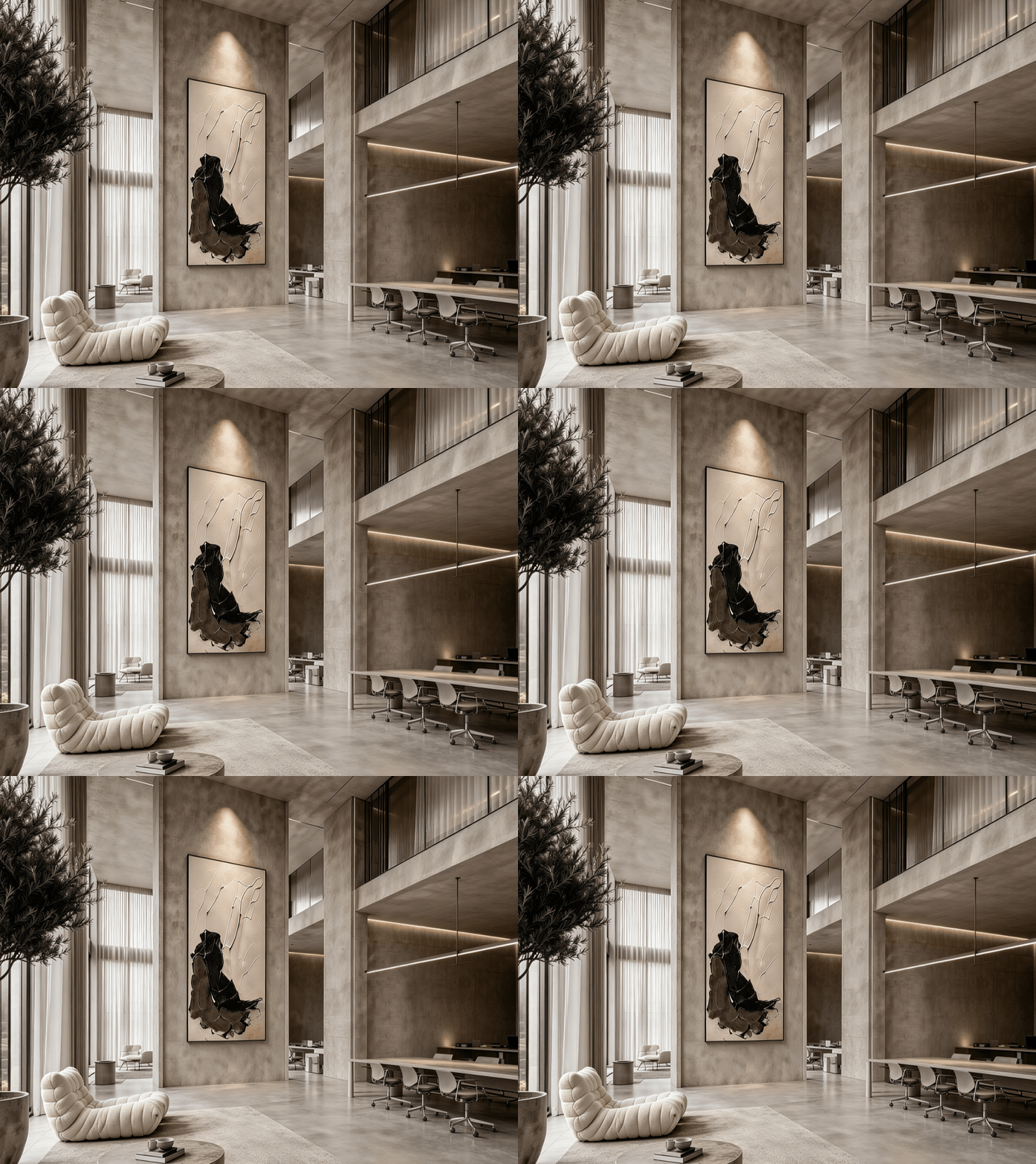
Installation was mostly about getting the lighting right. With a heavily textured oil painting, the artwork only comes alive when the raised paint catches the light and casts small shadows. A flat wash of light kills it. We needed a spotlight at a precise angle so the impasto ridges cast defined shadows across the canvas.
We spent an afternoon adjusting the spotlight angle, testing every fifteen minutes as the daylight outside shifted. We finally locked it in around dusk, when the mix of warm artificial light and fading natural light made the depth and texture just pop. The same painting looked flat at noon and sculptural at 6 PM — lighting is that important with textured work.
We also added a small interpretive card next to the pillar, explaining that the mountain ridges in the painting are the same ridges you see through the window. It gives people a reason to look closer, and then look outside, and then look back. That back-and-forth is what makes them stop.
◆ ◆ ◆
What Changed
Now when we go back to visit, the difference is obvious. Attendees walking into the lounge almost always stop in front of that pillar. They lean in. Some get close to see the brushstrokes (the varnish handles it). Many take photos. Groups waiting between meetings gather around it instead of staring at their phones. Chen says the lounge finally feels like a destination, not a pass-through.
The Result
A four-meter bare concrete pillar became the most-photographed spot in the meeting center. The hand-painted oil painting gave the lounge a focal point, a conversation starter, and a connection to the mountain landscape outside. What used to be an empty hallway with chairs is now a space where people choose to spend time.
Honestly, a lot of spaces feel like something is missing after renovation, and it is rarely the renovation itself. It is usually just a lack of one thing that catches your eye. An empty wall, no matter how expensive the paint, is still just a wall. Put a piece with real paint texture and shadow on it, and the whole room changes instantly.
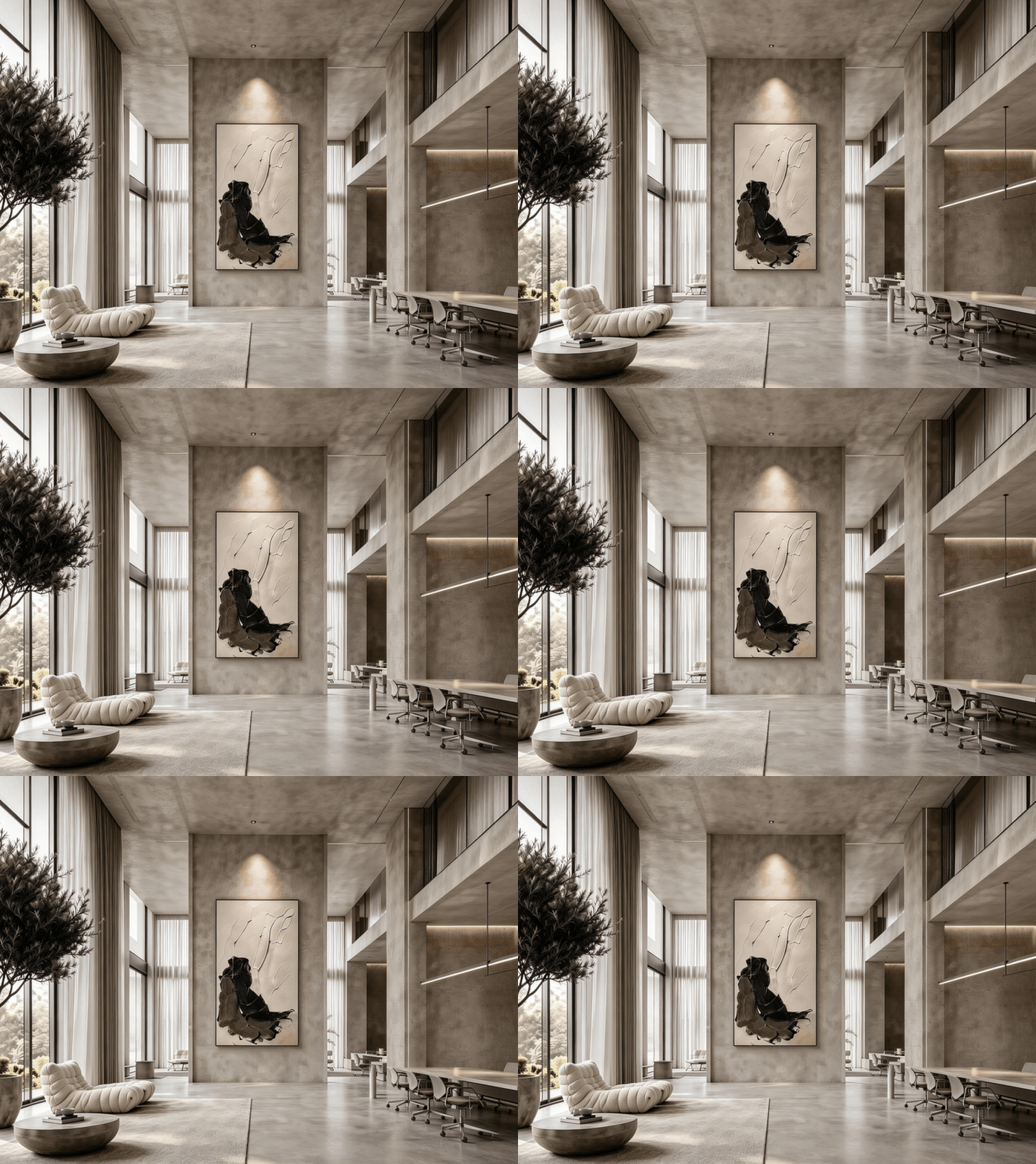
For the soft furnishing renovation of a meeting center lounge, customized large-scale themed hand-painted oil paintings are adopted. Integrating local cultural elements, the works feature layered impasto brushwork with hand-painted detail. Variable paint thickness restores local landscapes, while museum-grade UV-protective varnish guarantees durability and avoids reflection and fading issues common to flat prints. Dynamic light and shadow on textured brushwork soften the cold commercial atmosphere and infuse the lounge with profound cultural heritage. The artwork becomes a popular focal point and greatly improves attendees' visual experience and space recognition.